Sleep Recovery - Guide
Sleep Recovery: A Guide to Restorative Sleep for Tired-but-Wired Nights
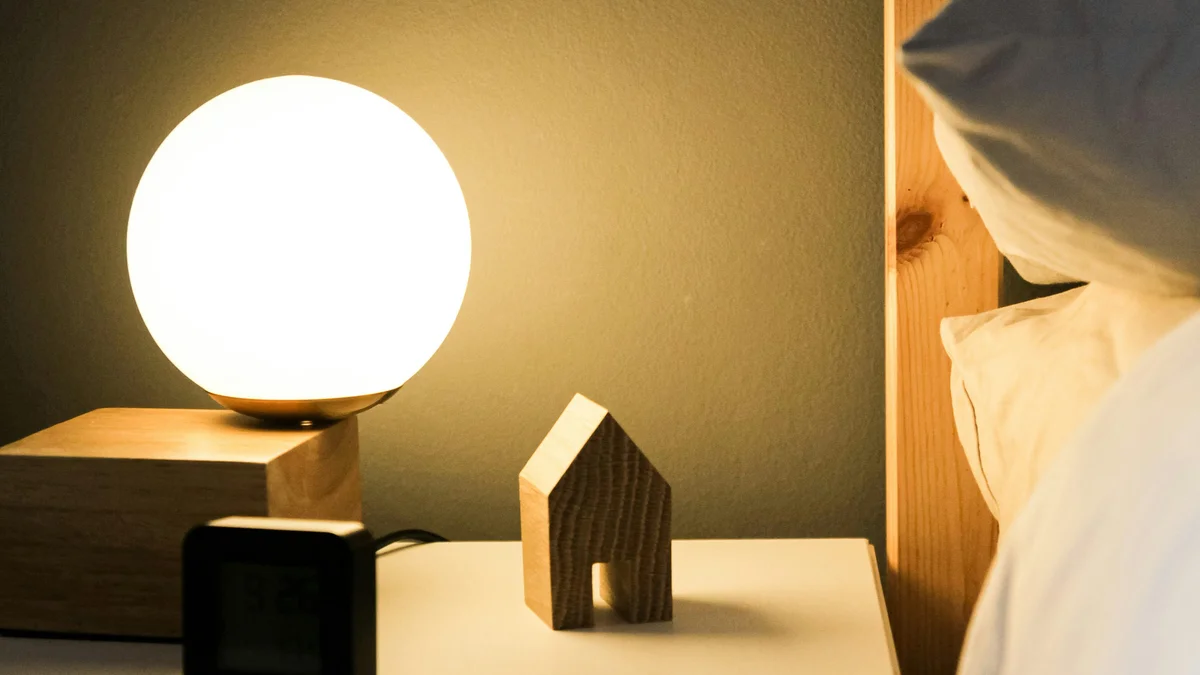
It is 3 A.M. and you are staring at the ceiling again. Your body is heavy with exhaustion - you can feel it in your legs, behind your eyes, in the way your thoughts move through wet sand. And yet somewhere under your skin, a motor is still running. Your mind is rehearsing tomorrow’s meeting, re-litigating this afternoon’s conversation, counting the hours left until the alarm. You are tired and wired at once, and you would give almost anything to put the day down.
Or maybe the scene is the morning. You were in bed for eight hours. Real hours, honest hours. And still the alarm finds you unrefreshed, heavy, already behind, already planning. You wake up tired and immediately hand yourself more instructions. The night that was supposed to refill you barely moved the needle.
Here is the reframe this whole guide rests on: for most tired-but-wired people, the problem is not the number of hours in bed. It is that the nervous system never fully entered the state where recovery happens. Sleep is not a switch you flip by lying down - it is a state your body enters when it receives enough signals of safety, and a system that spent all day in low-grade activation often keeps a foot on the brake all night. The good news: this is learnable, gently, without rigid rules or another demanding routine.
This guide is the complete map of sleep recovery as the nervous system sees it: what it is, why your nights stopped restoring you, how to read the signs, and the small evening and daytime practices that teach your body it is safe to rest deeply again. Every section links to a deeper article, and the full reading list near the end covers all twenty-five posts in this cluster. Read it cover to cover, or jump straight to the section that describes your nights.
In this guide:
- What sleep recovery actually means
- Why your nights stop restoring you
- Signs you slept but did not recover
- Tired but wired: why you cannot power down
- The evening anchor: how a night begins before bed
- A 90-second reset for the middle of the night
- Phones, screens, and the bedroom
- How your day shapes your night
- Sleep recovery in your real life
- Myths, mistakes, and permission to be imperfect
- The complete reading list
- Frequently asked questions
- Start with tonight
What sleep recovery actually means
Sleep recovery is not a longer night. It is what your nervous system does with the hours you already give it.
The book’s core argument is quiet and a little radical: most people who feel chronically unrested are not short on hours in bed. They are short on recovery state. Your autonomic nervous system has two broad modes. One is built for action - heart rate up, muscles ready, mind scanning. The other is rest and digest, the parasympathetic state where the heart slows, muscles release, and hormones that promote repair and restoration are finally released. Recovery only happens in that second state. As the book puts it: “This is the state where your Quiet Core is actually rebuilt and replenished.”
When your days are full of pressure and your evenings never truly wind down, your system spends most of its time in the first mode - and carries it into bed with you. You can be technically asleep while your body stays half-guarded. The hours pass, but the rebuilding is thin.
That is why sleep recovery is a skill of regulation, not a checklist of bedroom rules. It is the practice of giving your nervous system enough safety signals - in the evening, through the day, at 3 A.M. - that deep recovery becomes possible again. It is not dramatic. It is quiet. It is slow. And it is very learnable.
The plain definition, with the full nervous-system frame, is in What Is Sleep Recovery? A Nervous-System Definition. If you want the same idea in even gentler language, Sleep Recovery Explained Simply: Why Your Nights Don’t Restore You breaks it down without jargon. And if you are brand new and want a place to begin this week, The Beginner’s Guide to Sleep Recovery: 7 Gentle First Steps is the softest on-ramp. For the system underneath all of this, the nervous system regulation hub is the neighboring guide.
Why your nights stop restoring you
There is a chain, and it usually starts long before bedtime.
First, chronic activation. A day of back-to-back demands, unresolved tension, and no real pauses keeps your body in a low simmer. Then the hormones follow: as the book describes it, when the system never gets a genuine break, cortisol - the hormone of alertness - stays elevated longer than it should, while restorative hormones struggle to do their evening work. Cortisol is not your enemy; it is a signal. But a signal that never switches off keeps the night shallow.
Then the sleep itself changes. “You may fall asleep easily, but you wake up still feeling tired because your body never fully entered deep recovery during the night.” That sentence from the book describes millions of people who believe they are sleeping badly because of a mattress or a bad habit. Often the sleep was there. The recovery was not.
And there is a final link in the chain: the day’s deficit gets charged to the night. When you skip every pause and push through to the evening, there is no gradual descent left in you - just a collapse, and a system still humming from the day. A night that has to absorb a whole day of unprocessed activation cannot restore you fully. This is also why sleep alone cannot fix deeper depletion - why sleep doesn’t fix fatigue covers that boundary honestly.
The full walkthrough of the causes is in Waking Up Tired After 8 Hours: 7 Nervous-System Causes. For the physiology - cortisol, melatonin, and rest and digest explained accessibly and without fear - The Science of Sleep Recovery: Cortisol, Melatonin, Rest and Digest is the deep dive.
Signs you slept but did not recover
Non-restorative sleep has a signature, and once you can read it, you stop blaming yourself for it.
The clearest sign is the morning gap: enough hours in bed, and still heavy. Others are subtler. You need a long ramp to feel human after waking. Your evenings feel flat rather than restful. On weekends you oversleep by hours and wake up no better - a classic sign that the nights were light and the system is running a deficit. You fall asleep quickly not because you are calm but because you are empty.
One important reframe from the book: these signs are information, not verdicts. They are your nervous system’s early warning system, telling you it needs more safety and recovery again. That reframe matters, because shame is itself activating - and you cannot shame a body into resting.
The night-specific signals are cataloged in 9 Signs You’re Asleep but Not Actually Recovering, and the subtler ones most people miss in Sleeping but Not Feeling Rested? 7 Subtle Signs You Missed. If you want a quick read on your own nights, A 3-Minute Sleep Recovery Self-Check (No Wearable Required) walks you through it gently. And to tell the difference between ordinary tiredness that sleep can repair and the deeper depletion it cannot, the tired vs. depleted guide draws that line clearly.
Tired but wired: why you cannot power down
Tired but wired deserves its own section, because it is the state this whole cluster is named for. You are exhausted and switched on at the same time. The body wants to stop; the system never received the signal.
This is not a discipline problem. You did not fail to relax because you lack willpower. You cannot will your way into a recovery state - if anything, trying harder makes it worse, because effort is activation. The wired feeling usually means your day contained no off-ramps: no slow transitions, no genuine pauses, no moment when your system was told the demands were over. Many people spend years in that state, waiting for a calmer season to rest in.
The trap of waiting is its own pattern. “I’ll sleep when things calm down” sounds reasonable, but the calm season rarely announces itself, and a nervous system that has practiced activation for months does not automatically know how to stop when the calendar finally clears. The waiting itself becomes another way of deferring recovery.
Why winding down has become so hard for so many people - and why it is not your fault - is unpacked in Why You Can’t Wind Down at Night Anymore (It’s Not Your Discipline). The waiting trap, and what to do instead of waiting, is in “I’ll Sleep When Things Calm Down”: Why Waiting Backfires. For the general tired-but-wired state from a different angle, why you feel tired but wired is the companion piece, and if rest itself feels impossible even when you try, too activated to rest names that experience precisely.
The evening anchor: how a night begins before bed
Here is one of the most useful ideas in this whole cluster: your night does not begin when you get into bed. It begins an hour or two earlier, in the transition.
Without a deliberate ending, the day simply trails off. The book describes the pattern exactly: “Without a clear evening anchor, many people stay in low-grade activation mode until they collapse into bed, which leads to poor sleep and waking up already depleted.” Collapse is not rest. Collapse is the day running until the fuel light comes on.
An evening anchor is a short, repeatable sequence that tells your nervous system the day is ending and it is safe to rest. It does not need to be long or elaborate. A simple version has four moves: put the screens away or out of reach, slow the breath with a few long exhales, do something quietly comforting - a warm shower, herbal tea, a few pages of a paper book - and give the day a gentle look-through without planning tomorrow. Ten to twenty minutes is plenty. What matters is not the length but the message: the day is over, and you are allowed to put it down.
If you want a ready-made sequence, The 10-Minute Sleep Recovery Routine for Wired Evenings gives you one that fits a real evening. For the deeper body-first version - a full scan, position, and breath sequence to do in bed - The Pre-Sleep Body Reset: Step-by-Step for a Wired Night walks you through every step. The longer twenty-minute wind-down, and how to design an evening ritual as such, lives in the core-routine cluster at The Evening Wind-Down: A 20-Minute Routine, and the full architecture of daily anchors is in the core routine hub.
A 90-second reset for the middle of the night
And then there is the hardest moment: 3 A.M., eyes open, mind sprinting.
The instinct is to fight it - to calculate how many hours are left, to demand sleep return immediately. That demand is more activation, and it wakes you further. The gentler path is to stop chasing sleep and start signaling safety instead, and your breath is the fastest lever you have.
The mechanics are simple. A long, slow exhale - in for four, out for six to eight - nudges your system toward the recovery state, because the exhale is the part of the breath that calms. The physiological sigh, a double inhale followed by a long release, works even faster. Two or three cycles, under a minute, done in the dark without checking your phone. Then let the breath keep going, slow and unhurried, while you notice the weight of the mattress holding you. You are not trying to fall asleep. You are letting your body remember that it is safe enough to.
The full middle-of-the-night sequence, including what to do when the mind will not stop, is in The 90-Second Reset for a 3 A.M. Racing Mind. The single fastest technique has its own guide at the physiological sigh, the extended exhale is explained step by step in Extended Exhale Explained, and the complete toolkit of calming breathwork, including the sleep-specific practices, is in Breathing for Sleep.
Phones, screens, and the bedroom
You already know the scene: you finish a long day, and instead of rest you reach for your phone - a little scroll, just to unwind. Twenty minutes later you are more tired and more activated than before. The book names this swap precisely: your body was asking for rest, and you gave it more stimulation.
Screens are not a moral failing, and you do not need to shame yourself about them. The issue is simply what the phone does to a system trying to descend. Every feed is novelty, comparison, and micro-alerts - the exact inputs that keep the nervous system scanning. An evening of scrolling is often the reason the wind-down never happens, not just a symptom of it.
The gentle fix is a boundary of place, not a test of character. Give the phone a different room, or a drawer, in the last thirty to sixty minutes before sleep - and give yourself something warm to replace it with, not just an absence. The goal is not a perfect screen-free life. It is a bedroom that means one thing: rest.
How to set a digital curfew without willpower battles is in The Digital Curfew: Set Boundaries That Stick, and making the bedroom itself a phone-free zone is in Phone-Free Zones: Create Sacred Spaces. If you have ever noticed that scrolling leaves you strangely more exhausted, mentally tired after scrolling explains the mechanism. For the bigger picture of what screens do to a tired brain all day, the digital overload hub is the full guide.
How your day shapes your night
A night is downstream of a day. If your daytime has no recovery in it, your evening has to do all the work - and usually it cannot.
The book sketches the pattern: you wake up tired after eight hours and immediately start planning your day, meeting pressure with more pressure, skipping every pause, and then wondering why the night stays shallow. The system that never got a midday breather arrives at bedtime with a full tank of unprocessed activation.
The fix is small and almost embarrassingly modest: brief resets during the day. A slow transition between meetings. A few long exhales before you open the next email. Ten minutes outside, or five minutes of nothing. Each one lowers the activation you carry into the evening, which is why people who take a genuine midday pause often report that falling asleep gets easier - they did not bring the whole day to bed with them. Naps count too: a short rest in the early afternoon, twenty to thirty minutes, can genuinely restore you, though a late-evening nap can steal the sleep pressure your night needs.
What your working day does to your night, and how to protect both, is covered in Sleep Recovery at Work: How Your Day Shapes Your Night. For the days when energy is scarce and even small practices feel like too much, Sleep Recovery on Low-Energy Days: When You’re Too Tired to Try offers a smaller menu. The midday version of the reset is in the midday reset, and the art of the pause between activities is in slow transitions.
Sleep recovery in your real life
Advice that assumes a quiet, empty evening is useless to most actual lives. Sleep recovery has to fit the life it is treating.
Parents. Your evening does not belong to you until late, and the house is loud until it suddenly is not. The parent version is built around the small window that does exist - after the kids are in bed - and it is short by design: a warm shower, a few minutes of belly breathing, bed. Ten minutes of a real anchor beats an aspirational hour that never happens.
High performers. If you operate on urgency and your output is excellent, rest can feel like a threat to your edge. The evidence points the other way: deep recovery is what protects clarity, judgment, and stamina over years. You do not have to choose between resting tonight and performing tomorrow.
Shift workers. When your nights are upside down, standard advice about evening anchors needs translation, not dismissal. The principles - safety signals, slow transitions, protecting your main sleep block - still work; the schedule bends around your life.
Already burned out. If you are past tired and into empty, the bar has to drop even lower. Start smaller than seems reasonable. One long exhale counts. One screen-free evening this week counts.
The parent version, step by step, is in Sleep Recovery for Parents: Gentle Nights in a Full House. The performance case is in Sleep Recovery for High Performers: Deep Rest Without Losing Your Edge. The reversed-rhythm guide is Sleep Recovery for Shift Workers: When Your Nights Are Upside Down, and the gentlest starting point of all is Sleep Recovery When You’re Already Burned Out: Start Smaller.
Myths, mistakes, and permission to be imperfect
Before we close the loop, three unlearnings.
First, sleep recovery is not sleep hygiene. Hygiene is the useful list - cool, dark room, limited late caffeine - and none of it is wrong. But hygiene manages the conditions around sleep, while recovery works on the state that enters the bed. You can have excellent hygiene and still wake unrefreshed, because the nervous system was never taught to let go. The honest comparison is in Sleep Recovery vs. Sleep Hygiene: Which One Actually Restores You?
Second, perfection is not required, and chasing it backfires. A rigid new bedtime regime is just another demand on a system that is already overloaded. The book offers this permission: “Some evenings you might fall asleep on the couch. The goal is not perfection - it is having reliable anchors that you return to most days.” Most days. That is the standard. The stubborn myths - including the perfect-bedtime myth - are dismantled in 5 Sleep Recovery Myths, Debunked (It’s Not About Perfect Bedtimes), and the common missteps, each with a gentler fix, are in 9 Sleep Recovery Mistakes (and the Gentler Fix for Each).
Third, this is not only a technique. At some point it becomes a story you tell about yourself - the person who stopped chasing perfect sleep and started actually recovering. That story is told honestly in How I Stopped Chasing Perfect Sleep and Started Real Recovery.
The complete reading list
Every article in this cluster, in reading order:
- What Is Sleep Recovery? A Nervous-System Definition
- Sleep Recovery Explained Simply: Why Your Nights Don’t Restore You
- The Beginner’s Guide to Sleep Recovery: 7 Gentle First Steps
- 9 Signs You’re Asleep but Not Actually Recovering
- Sleeping but Not Feeling Rested? 7 Subtle Signs You Missed
- A 3-Minute Sleep Recovery Self-Check (No Wearable Required)
- Waking Up Tired After 8 Hours: 7 Nervous-System Causes
- Why You Can’t Wind Down at Night Anymore (It’s Not Your Discipline)
- “I’ll Sleep When Things Calm Down”: Why Waiting Backfires
- The 10-Minute Sleep Recovery Routine for Wired Evenings
- The Pre-Sleep Body Reset: Step-by-Step for a Wired Night
- Sleep Recovery at Work: How Your Day Shapes Your Night
- Sleep Recovery on Low-Energy Days: When You’re Too Tired to Try
- Sleep Recovery vs. Sleep Hygiene: Which One Actually Restores You?
- 5 Sleep Recovery Myths, Debunked (It’s Not About Perfect Bedtimes)
- The Science of Sleep Recovery: Cortisol, Melatonin, Rest and Digest
- The 90-Second Reset for a 3 A.M. Racing Mind
- Sleep Recovery for Parents: Gentle Nights in a Full House
- Sleep Recovery for High Performers: Deep Rest Without Losing Your Edge
- Sleep Recovery for Shift Workers: When Your Nights Are Upside Down
- Sleep Recovery When You’re Already Burned Out: Start Smaller
- 9 Sleep Recovery Mistakes (and the Gentler Fix for Each)
- Sleep Recovery: 12 Questions, Answered
- The Sleep Recovery Checklist: A Free Printable for Your Nightstand
- How I Stopped Chasing Perfect Sleep and Started Real Recovery
And when you are ready for the neighboring hubs: the core routine for the daily anchors that hold mornings and evenings, tired vs. depleted for the line rest cannot cross, digital overload for the screen side of the equation, and nervous system regulation for the system underneath all of it.
Frequently asked questions
Why do I wake up tired after eight hours?
Because hours in bed and depth of recovery are different things. If your nervous system spent the day in low-grade activation, your night was probably lighter and shallower than the clock suggests - your body never fully entered the state where deep repair happens. The full explanation is in Waking Up Tired After 8 Hours: 7 Nervous-System Causes, and the related pattern of feeling tired all the time despite enough sleep is covered in tired all the time after 8 hours of sleep.
Is sleep recovery the same as sleep hygiene?
No, and the difference matters. Sleep hygiene is the list of conditions around sleep: dark cool room, limited caffeine, a comfortable bed. Sleep recovery works on the state you bring into bed - whether your nervous system can actually enter rest and digest. They complement each other, but if you already have good hygiene and still wake unrefreshed, the state, not the setup, is the place to look. The comparison is in Sleep Recovery vs. Sleep Hygiene.
Do naps help or hurt sleep recovery?
Both, depending on timing. A short rest in the early afternoon - the book suggests twenty to thirty minutes, and notes that even ten minutes of doing nothing can be powerful - can genuinely restore you without stealing much from the night. A long or late-evening nap releases the sleep pressure your night depends on and can leave you wired at bedtime. If nights are already fragile, treat naps as a daytime tool, taken early and kept short.
How long until I notice a difference?
Quietly and gradually, usually within a few weeks of consistent evening anchors. The first changes are subtle: falling asleep a little faster, waking a little less heavy, fewer 3 A.M. mind-races. Progress here is measured in softer nights, not overnight miracles. A gentle monthly way to check is the sleep recovery self-check, and Sleep Recovery: 12 Questions, Answered goes deeper on the timeline.
When should I talk to a professional?
If you suspect a sleep disorder such as insomnia or sleep apnea, or if exhaustion, low mood, or anxiety persist despite gentler nights, please involve a qualified professional. That is not a failure of the practices or of you - some things deserve expert care, and working on your nervous system alongside professional support is a both-and, not an either-or.
Start with tonight
Not with a new regime. Not with a perfect bedtime. Tonight, with one thing.
Choose whichever of these feels lightest: put your phone in another room an hour before bed, take five slow breaths with an exhale longer than the inhale once you are under the covers, or simply notice, without judgment, how your evening actually unfolds. That is the whole beginning. Recovery starts the moment your body receives one clear message that the day is over.
If you want a companion for the nightstand, The Sleep Recovery Checklist: A Free Printable for Your Nightstand turns everything in this guide into a single gentle page.
Quiet Core Reset walks you through the full path - how to recognize the activation that follows you to bed, how to signal safety to your nervous system, and how to build evenings that actually restore you, at your own pace, in the life you already have. You are allowed to end the day before everything is done. Your nights can begin to give back.
Educational content, not medical advice - if sleep problems or exhaustion persist, please consult a professional.