Sleep Recovery
9 Signs You're Asleep but Not Actually Recovering
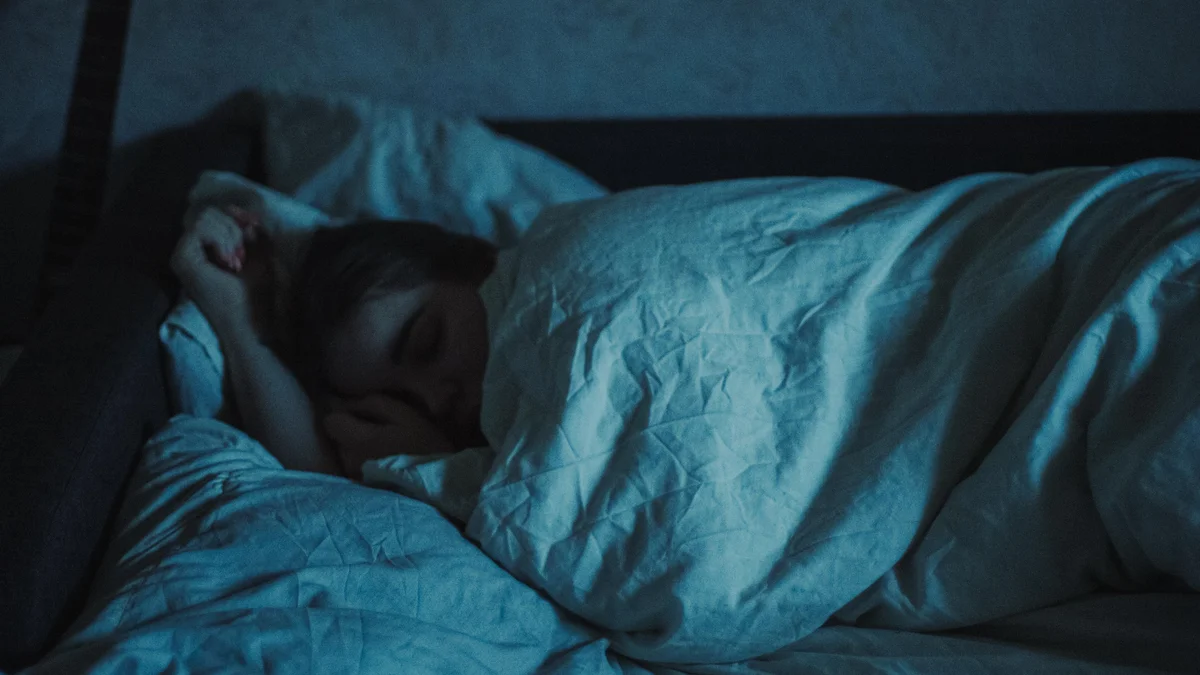
Last night is already a blur of nothing: no long wakings, no drama, no memories at all. By every measure you were asleep. And still the morning brought its flatness - the sense of a body that went somewhere for eight hours and came back with nothing.
Being asleep and being restored are not the same event. Sleep is the door. Recovery is the room behind it, where the nervous system finally sets its burdens down and does the quiet repair work it postponed all day. When that room stays shut, you get the strange signature of non-restorative sleep: hours pass, renewal does not. Reopening that room is the work of sleep recovery, and it starts with learning to recognize the signs - most of which hide in plain sight.
Key takeaways
- You can sleep through the night and still never enter the state where repair happens.
- Non-restorative sleep has a recognizable signature: unrefreshing mornings, wired evenings, days that start under pressure.
- These signs are information from your nervous system, not verdicts on your discipline.
- Small safety signals - an evening anchor, a longer exhale, a phone that sleeps elsewhere - begin reopening the door.
Asleep is not the same as restored
The book names the pattern early, because so many readers arrive with it. In Quiet Core Reset, Talon Greer lists “Difficulty falling into deep sleep or waking up feeling unrefreshed” among the clearest signals that the nervous system is running on empty.
Notice that these are two different problems. Sometimes the trouble is getting down - depth never quite arrives. Sometimes the trouble is coming up - you slept, but the night did not finish its work. Both share one root: a nervous system that stayed in its defending mode while the body was technically unconscious.
None of this shows up on a clock. You cannot see it in the hours. You can only see it in how the day arrives - which is why the signs below are worth reading slowly.
The nine signs, one by one
-
You wake tired after enough hours. The arithmetic says one thing and your body says another. Eight hours in, and the first feeling of the day is a flat heaviness that no amount of stretching seems to reach.
-
Sleep comes quickly, but thinly. You go under fast most nights - not because you are relaxed, but because you are emptied. Exhaustion pulls you down. Relaxation would let you settle, and that is a different thing.
-
Mornings start at full speed. Your eyes open and the planning begins before your feet touch the floor: the inbox, the school run, the first meeting. The body was asking for a gentle arrival. It got immediate pressure instead.
-
Evenings feel like holding your breath until bed. There is no moment in the evening where the day actually ends - no soft landing, no transition. You push through, and then you collapse. The difference between those two verbs is where recovery used to live.
-
Your mind wakes up when the lights go off. All day you were too busy to think. The pillow, finally still, hands the microphone to every unsolved thread. Tired in the body, buzzing in the head - the classic wired night.
-
Small things wake you. A door, a car passing, the heater clicking on. A nervous system still half on duty sleeps the way a sentry rests: lightly, in boots. Deep sleep requires believing the watch has been relieved.
-
A weekend of sleeping in changes nothing. You give it eleven hours on Saturday and wake with the same flatness. That is one of the quiet confirmations: the deficit was never measured in hours, so hours cannot repay it.
-
The day cannot start until the second coffee. This one carries no blame - caffeine is a reasonable tool. But when it stops being a pleasure and becomes the ignition switch, it is worth asking what the night was doing instead of waking you.
-
Small stresses take longer to shake. A hard morning used to dissolve by lunchtime. Now Tuesday is still sitting on your shoulders on Thursday. Repair is thin everywhere, not only in the mornings, because the same shallow recovery runs the whole system.
Why this happens: the body stayed on duty
Here is the gentle mechanics of it. All day, under ordinary modern pressure, your nervous system holds a low hum of activation - not panic, just readiness. Evenings that offer no real ending carry that hum all the way to the pillow. The body lies down braced.
A braced body does not repair well. The chemistry of watchfulness lingers into the night, while the hormones that run repair wait for a quiet room that never quite arrives. So the night stays lighter, the depth stays shorter, and you surface in the morning with the work undone. Nothing failed. The safety condition was simply never met.
That framing matters, because it moves the question from what is wrong with me to what signal is missing. Signals can be sent. That is the good news hiding under all nine signs.
What to do with what you notice
The book could not be clearer on this, and it is worth letting the sentence land. In Quiet Core Reset, Talon Greer writes, “These signs are not failures. They are your nervous system’s intelligent early warning system telling you: ‘I need more safety and recovery again.’”
Read it once more, slowly, because most of us were taught to read these signs as evidence of weak discipline. They are the opposite: a system asking, precisely and politely, for what it needs.
The answer can be small. Choose one evening anchor this week - a soft ending to the day, ten minutes or more, mostly the same shape each night. Add the extended exhale in bed: in for about four, out slowly for six to eight, a minute or two. Let the phone sleep in another room if it can. If you are not sure where you stand, a 3-minute sleep recovery self-check will help you locate yourself without judgment, and the 9 signs of waking up tired after 8 hours explores the morning side of this in depth.
Start with one signal, not four. The goal is a message your body hears often enough to trust.
When the signs deserve a professional’s eye
Self-kindness and honesty can sit together, so here is the honest part. If exhaustion persists despite weeks of genuinely gentler evenings, or if you notice loud snoring, pauses in breathing during sleep, or a sleepiness during the day that feels beyond ordinary tiredness, it is time to involve a doctor or sleep specialist. Some causes of unrefreshing sleep are physical and treatable, and no breathing practice should be asked to do their job.
It is also worth distinguishing tired from depleted. A restorative night repairs ordinary tiredness; it cannot repair the deeper kind that comes from long-term overextension. Tired vs. depleted explains the difference, and the subtler signs you might be missing covers the quiet versions of everything above.
If you want the full map - the signs, the causes, and the small practices that answer them - that is exactly what Quiet Core Reset was written to provide, one gentle chapter at a time.
Frequently asked questions
What is non-restorative sleep, in plain terms?
It is sleep that does not leave you renewed - hours of unconsciousness without the deep recovery that makes sleep worth having. The marker is not how long you slept but how you arrive in the morning: flat, heavy, and already behind, even after enough hours.
Can this happen even if I sleep through the night?
Yes, and it often does. Sleeping straight through says your body could let go of consciousness. It says nothing about whether your nervous system let go of its watch. Depth, not continuity, is what was missing - and depth follows safety, not silence.
Is this the same as insomnia?
They are different patterns. Insomnia centers on trouble falling or staying asleep. Non-restorative sleep is sleep that happens but does not repair. If sleep trouble of any kind is persistent or severe, a professional is the right next step - both patterns deserve real care.
Three of these signs sound familiar. Where do I start?
Start with the smallest practice that fits tonight: a few minutes of longer exhales in bed, or one wind-down evening this week with the phone charging in another room. Signs respond to repetition, not intensity, so choose what you can honestly repeat.
Educational content, not medical advice - if sleep problems or exhaustion persist, please consult a professional.