Digital Overload
Digital Overload: What It Is, Why It Exhausts You, and How to Create Space
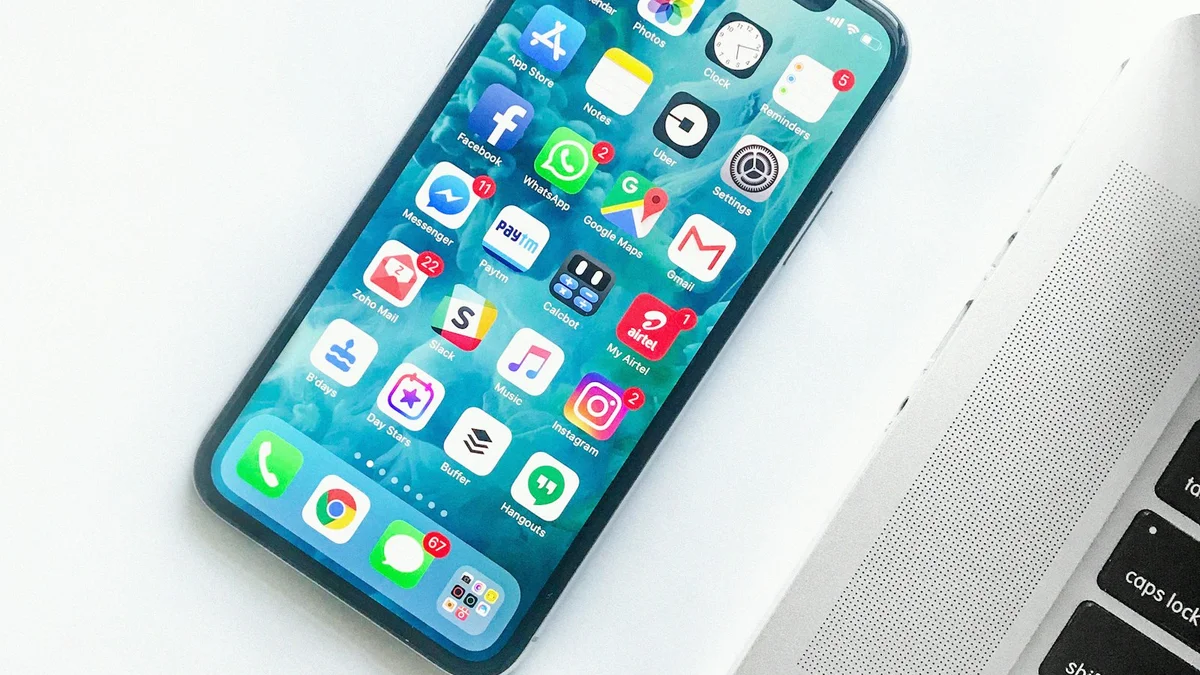
You finish work. You pick up your phone to “relax.” An hour later, you’re three TikToks deep, your eyes are dry, and you feel… tired. But you didn’t do anything. You didn’t run a marathon. You barely moved.
Welcome to digital overload - the invisible force draining your energy without you realizing it.
This article explains what digital overload actually is, why it exhausts you so completely, and how you can start creating space in your daily life. Not with a dramatic detox. Not with guilt. With small, practical shifts.
For a complete overview, visit our digital overload guide.
Key takeaways
- Digital overload is fragmented attention, not a screen-time number.
- Micro-interruptions and dopamine loops keep your nervous system switched on, which is why rest stops working.
- All-or-nothing detoxes usually backfire. Adding small pockets of space works better.
- Start with three moves: protect your mornings, cut non-essential notifications, add one phone-free zone.
What Is Digital Overload?
The book Quiet Core Reset defines it clearly: “In today’s world, one of the most powerful yet invisible drains on your Quiet Core is the constant fragmentation of your attention caused by screens, notifications, and digital devices.”
Digital overload isn’t about how much time you spend on your phone. It’s about what that time does to your nervous system.
Every notification pulls your attention away. Every scroll fragments your focus. Every quick check adds a tiny drain to your mental energy. Individually, these interruptions seem harmless. Collectively, they’re exhausting.
The book explains: “Your brain and nervous system were never designed to handle the volume and speed of information we are exposed to today.”
You’re running modern demands on ancient hardware. No wonder you’re tired.
Why Digital Overload Exhausts You
Let’s break down the mechanisms - without jargon.
Attention Fragmentation
Every time you switch tasks - from work to phone, from phone to conversation, back to work - your brain pays a tax. It takes time and energy to reorient.
The book describes “attention residue”: even after you put your phone down, part of your mind stays on whatever you just saw. A message you need to respond to. A headline that worried you. A comment that bothered you.
These fragments accumulate. By evening, your attention is scattered across dozens of unfinished threads.
The Paradox of Connection
“This fragmentation creates a strange paradox: we are more digitally connected than ever before, yet many of us feel increasingly disconnected from ourselves, our bodies, and the present moment.”
You can text anyone in the world. You can see what your friends ate for lunch. You can read breaking news as it happens.
But when was the last time you sat with your own thoughts without reaching for your phone?
The “Rest” That Isn’t Rest
Here’s what happens most evenings:
You finish work. You sit on the couch. You open Instagram. Minutes become half an hour. You consume dozens of short videos, compare yourself to strangers, absorb worrying news, respond to messages.
Your body is still. But your nervous system is active.
The book describes it precisely: “Your body may be resting physically, but your nervous system has remained in a state of mild activation the entire time. Deep, restorative rest never truly occurs.”
This is why you feel “mentally tired without doing much.” You did plenty - just none of it was rest.
Dopamine and the Seeking Loop
Notifications and likes keep your brain in a “seeking” state. Each one is a small hit of dopamine - the neurotransmitter associated with anticipation and reward.
But dopamine isn’t about pleasure. It’s about wanting. It keeps you scrolling, searching, checking - always looking for the next hit.
The book explains that this constant seeking makes it harder to access rest-and-digest mode. Your nervous system stays in low-grade activation, even when nothing is happening.
The Signs of Digital Overload
You might be experiencing digital overload if you recognize these patterns:
Physical signs:
- Tired eyes, even after sleeping well
- Neck and shoulder tension from looking down
- Difficulty falling asleep despite exhaustion
Mental signs:
- Difficulty concentrating on one task
- Feeling “scattered” or unfocused
- Mental fatigue without physical exertion
Emotional signs:
- Irritability when you can’t check your phone
- Anxiety when separated from your device
- Feeling overwhelmed by information
Behavioral signs:
- Reaching for your phone automatically
- Scrolling without purpose or enjoyment
- Checking notifications even when you know there’s nothing important
If several of these resonate, you’re not alone. Digital overload is nearly universal in modern life.
Why “Digital Detoxes” Often Fail
Many people try to solve digital overload with a detox - deleting apps, going offline for a week, throwing their phone in a drawer.
The book explains why this backfires: “A detox is usually an all-or-nothing approach… creates a lot of resistance, and often leads to rebound behavior once the detox ends.”
Detoxes fail because:
-
They’re temporary. You can’t delete Instagram forever. Eventually, you’ll reinstall it - and probably use it more than before.
-
They don’t address the cause. The problem isn’t the apps. It’s your relationship with them.
-
They create resistance. Telling yourself you “can’t” use your phone makes you want it more.
-
They ignore reality. Most people need their phones for work, communication, navigation, and daily life.
The alternative isn’t a detox. It’s space-creation.
What Is Gentle Space-creation?
The book introduces a different approach: “Gentle space-creation… you consciously create small pockets of space and calm within your daily digital life.”
Instead of removing technology, you change how you relate to it. You create boundaries. You build habits. You protect small moments of quiet.
This isn’t about discipline. It’s about design.
The book frames it as reclaiming control: “Creating space in a digital overload is not about completely rejecting technology or living offline. It is about reclaiming sovereignty over your own attention and energy in a realistic, sustainable way.”
Sovereignty. Not deprivation.
How to Create Space: 5 Starting Points
You don’t need to overhaul your life. Start with one or two of these:
1. Protect Your Mornings
Keep your phone out of the bedroom. For the first 30-60 minutes after waking, don’t check notifications.
Use this time for coffee, stretching, a walk, or simply sitting with your thoughts.
You’ll be surprised how this changes your day. You begin in calm instead of chaos.
2. Turn Off Notifications
Go through your phone and disable everything non-essential. Keep only what truly requires immediate attention.
The book promises: “Most people discover that once notifications stop interrupting them every few minutes, their nervous system relaxes noticeably within just a few days.”
This is one of the fastest ways to feel a difference.
3. Create Phone-Free Zones
Designate spaces where your phone doesn’t go: the bedroom, the dinner table, the bathroom.
The physical distance reduces the urge to check. “When your phone is not physically within reach, the urge to check it decreases dramatically.”
4. Set Consumption Windows
Instead of scrolling randomly throughout the day, choose specific times for social media - say, 7-8 PM.
Outside those windows, close the apps. You’ll realize most of what you were “missing” wasn’t worth checking.
5. Practice the Mindful Pause
Before opening any app, pause for 5 seconds. Ask: “What am I hoping to get from this right now?”
If the answer is “habit” or “avoidance,” close the app and choose something else.
This simple question builds the muscle of conscious choice.
What to Expect
These changes won’t remake your life overnight. But here’s what typically happens:
Week 1: It feels awkward. You’ll reach for your phone out of habit. You’ll wonder if this is doing anything.
Week 2-3: Small shifts appear. Mornings feel calmer. Evenings feel more spacious. You notice your attention improving.
Month 1: The changes compound. You sleep better. You’re less irritable. You feel more present.
The book reminds us: “The most important principle is progress over perfection.”
Don’t aim for perfect. Aim for better.
The Bigger Picture
Digital overload isn’t a personal failure. It’s an environmental condition. Your phone was designed to capture your attention. Your nervous system wasn’t designed to resist it indefinitely.
Gentle space-creation isn’t about becoming a different person. It’s about adjusting your environment to support the person you already are.
“The goal is not to live without technology, but to stop letting technology live inside your nervous system 24/7.”
You don’t need to delete your apps. You need to decide when they serve you and when they don’t.
That’s the beginning of space.
Frequently asked questions
What exactly counts as digital overload?
Any pattern where digital demands fragment your attention faster than you can recover from it. It’s defined by how scattered and drained you feel, not by hours on a screen-time report.
Is digital overload a medical diagnosis?
No. It’s a description of a very common strain on attention and energy. If your symptoms are severe or persistent - especially low mood or exhaustion that doesn’t lift - it’s worth talking to a professional.
How is it different from just spending a lot of time online?
Two hours of deliberate use can leave you fine, while thirty minutes of scattered checking can leave you wrecked. Fragmentation is the drain, not the clock.
Can digital overload be reversed?
Yes. Most people notice calmer mornings, better sleep, and steadier focus within a few weeks of protecting their attention - no app deletion required.
Go deeper: Explore digital overload explained simply for an even more accessible overview. Or read about screen fatigue signs to understand what your body is telling you. If you’re new to gentle space-creation, start with our beginner’s guide.
For practical strategies, see our guide on phone boundaries.
If you want the full toolkit - the phone boundaries, the mindful consumption practices, the low-energy-day versions - Quiet Core Reset walks through all of it in one chapter, with practical tools you can start tonight. No quitting your devices. No guilt. Just a quieter relationship with the thing that’s been quietly taking your evenings.
This article explains how the book describes digital overload and gentle space-creation. It is not medical advice. If low mood or fatigue persists, consult a professional.