Nervous System Regulation
Overstimulation: When the World Gets Too Loud
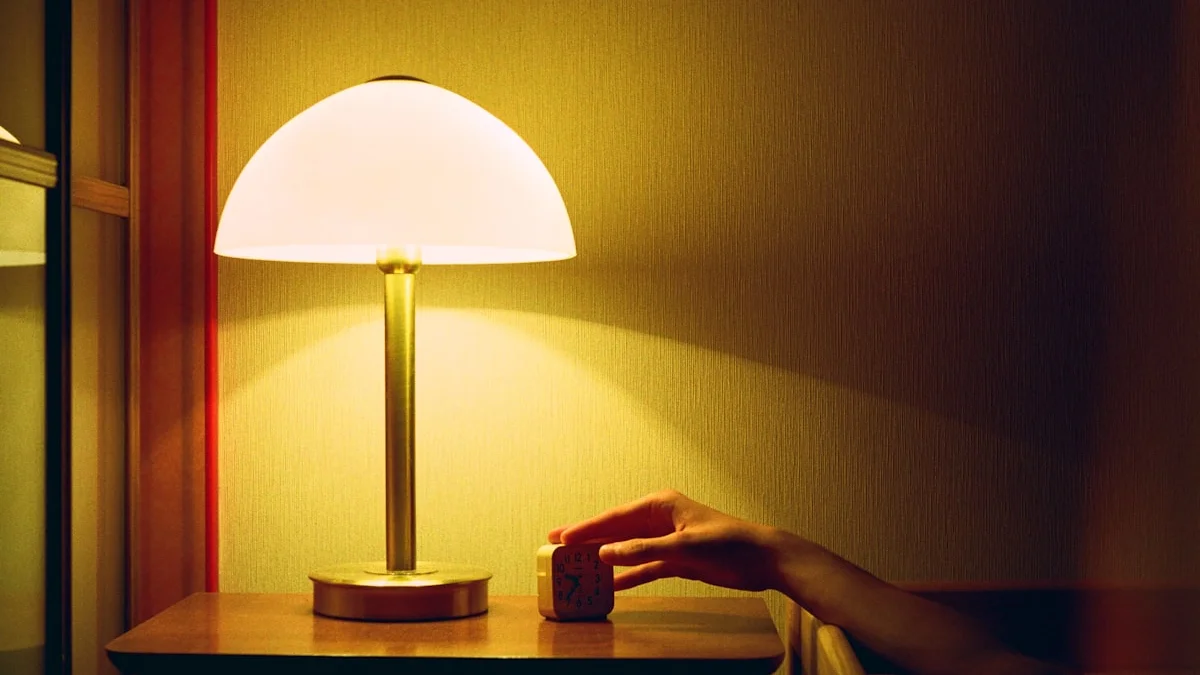
It is 6:40 in the evening. The fridge hums. A cartoon plays in the living room at a volume chosen by a seven-year-old. Your phone buzzes face-down on the counter, twice, then again. Someone asks you a question about the weekend from another room, and the spoon you are holding slips - and you snap. Not at anything that happened. At the spoon. At the noise. At all of it at once.
Nothing in that kitchen was an emergency. Nothing even changed, really. Only the volume did, and your system had nothing left to filter it with. That moment has a name: overstimulation.
If you have been wondering why ordinary evenings started to feel like standing next to a speaker, this page is for you. It explains overstimulation plainly: what it is, why it exhausts a tired nervous system, and what lowers the volume. For the full map, our nervous system regulation guide starts at the beginning.
Key takeaways
- Overstimulation is a volume problem, not a character problem: more input arriving than your nervous system can filter in the moment.
- It builds quietly: a system kept on alert long enough settles into a protective mode where every input lands harder.
- Irritability at minor inconveniences is a signal, not an overreaction: a maxed-out filter can no longer sort urgent from unimportant.
- The way out is less input, not more resilience: fewer open channels, one quieter corner, one stimulus at a time.
Overstimulation, in one paragraph
Overstimulation is what happens when more input arrives than your nervous system can sort in real time. Your brain is a filter before it is anything else. Every second, it decides what gets through: which sounds matter, which can be ignored, which light is a threat. That sorting is work, and it costs energy on every input.
You were built for inputs that arrive in waves: activity, then quiet. The world you live in sends input on every channel at once, all day, and calls it normal. The book describes the setting we have built for ourselves: “We live in an era specifically engineered to drain the human nervous system while convincing us that constant depletion is the price of success and relevance.”
Engineered, not accidental: a world tuned for engagement, meeting a filter that evolved for a quieter world. As the book puts it plainly: “The brain is not designed to handle this level of input 24/7.”
Why the filter gives out
When the system is rested, this sorting happens invisibly. Under chronic load, the triage breaks down first. The book explains what happens to a body that never gets a real stand-down: “It stops expecting long periods of safety and instead stays in a protective, energy-conserving state.” Protective mode scans, and scanning keeps the filter open to everything.
So the day becomes a drip you never fully notice: notifications, open tabs, background TV, a group chat refreshing. Together they keep the filter running at capacity from the first alarm until you finally lie down. By evening there is no sorting capacity left, and the smallest new input lands on raw nerves. That is why the spoon gets the snap your boss did not.
The signs: too loud, too bright, too much
Among the quiet signals a worn-down system sends, the book lists this one plainly: “Increased sensitivity to noise, lights, or minor inconveniences”.
In real life, that line looks like this. The doorbell makes you flinch the way it never used to. Sounds you have ignored your whole life - a fork on a plate, a colleague’s keyboard - start crawling under your skin. And small friction - a lid that will not close, a question asked one room away - now lands like an emergency.
Worth underlining: “Your nervous system is responding exactly as it was designed to respond - by signaling that something is wrong when it’s exposed to chronic, low-grade stress without adequate recovery.” The snap at the spoon is your system raising its voice because you did not hear the whispers. Sensitivity to noise and light is not the damage but the meter reading - and the goal is not to stop snapping, but to bring the input back inside what one filter can carry.
Less input, not more resilience
The standard advice is to toughen up and get better at ignoring. But you do not fix an overflowing sink with stronger hands; you fix it at the tap. For overstimulation, the tap is input. Three gentle moves - no phone-quitting required.
Fewer channels. Choose where the world may reach you and close the rest: one notification stream instead of six, one group chat you check on purpose instead of four that check you.
One quieter corner. You do not need a silent house; you need one place with fewer voices in it. A chair with a lamp, a corner where nothing beeps. Your system does not need your whole life to be quiet; it needs somewhere the volume clearly drops, so it can remember what standing down feels like.
One stimulus at a time. Eat without a screen, walk one loop without a podcast. Single-stream input is what your filter was built for; a few minutes of it teaches your system that input does not always spike.
None of this requires disappearing from your life; you are only turning the room down enough to actually be in it.
What this looks like on an ordinary Tuesday
Simple does not mean abstract. It looks like this.
Before you open anything in the morning, you pick the one channel allowed to interrupt you today. That is one decision made once, instead of sixty notifications making themselves.
At lunch, you eat five minutes of food and nothing else - boring the way a stretch is boring, and strangely restoring.
In the evening, you sit in one spot with one lamp for ten minutes. If you snap at something small anyway, that was the filter, not the person - lower the input instead of raising the self-criticism.
If you want to go one layer deeper on the input side, Why You Feel Mentally Tired After Scrolling (and What to Do) explains what constant scrolling does to your attention, and Notification Boundaries That Don’t Make You Miss Anything shows how to close channels without going dark.
For the neighboring pieces of this same picture: why your social battery runs on empty covers the moment people themselves become too much input, why boredom is good for a tired nervous system makes the case for unfilled minutes, and why small decisions drain your energy explains the other cost of a day full of pings - every input is also a tiny decision.
When you are ready for the complete practice, Quiet Core Reset lays out the quiet reset step by small step.
Frequently asked questions
Why do I snap at small things when I am not even angry?
Because by the time the small thing arrives, the filter is already full - the snap is the last drop, not the spoon. Anger is not the root cause here; load is.
Is overstimulation the same as being highly sensitive?
No. High sensitivity is a trait some people carry more strongly than others. The state described here is different: anyone becomes sensitive to input when the filter runs out of capacity. A trait explains why one person fills up faster; the state explains why everyone eventually does.
Do I have to give up my phone to fix this?
No. The goal is not zero input; it is input you chose. Turn off what is not yours, keep what is, and give yourself a few single-stimulus minutes a day. A quieter setting on the same life is usually enough.
When should I talk to a professional about sensory sensitivity?
If the sensitivity is intense, persistent, or starts narrowing your life, it is worth describing to a doctor or a qualified professional. Sensory sensitivity has many possible causes; this article covers one common one.
This article explains how the book describes overstimulation and gentle ways to reduce input. It is not medical advice. If sensory overload, anxiety, or exhaustion persist, consult a professional.