Work Energy
Remote Work Energy: When Home Never Stops Being the Office
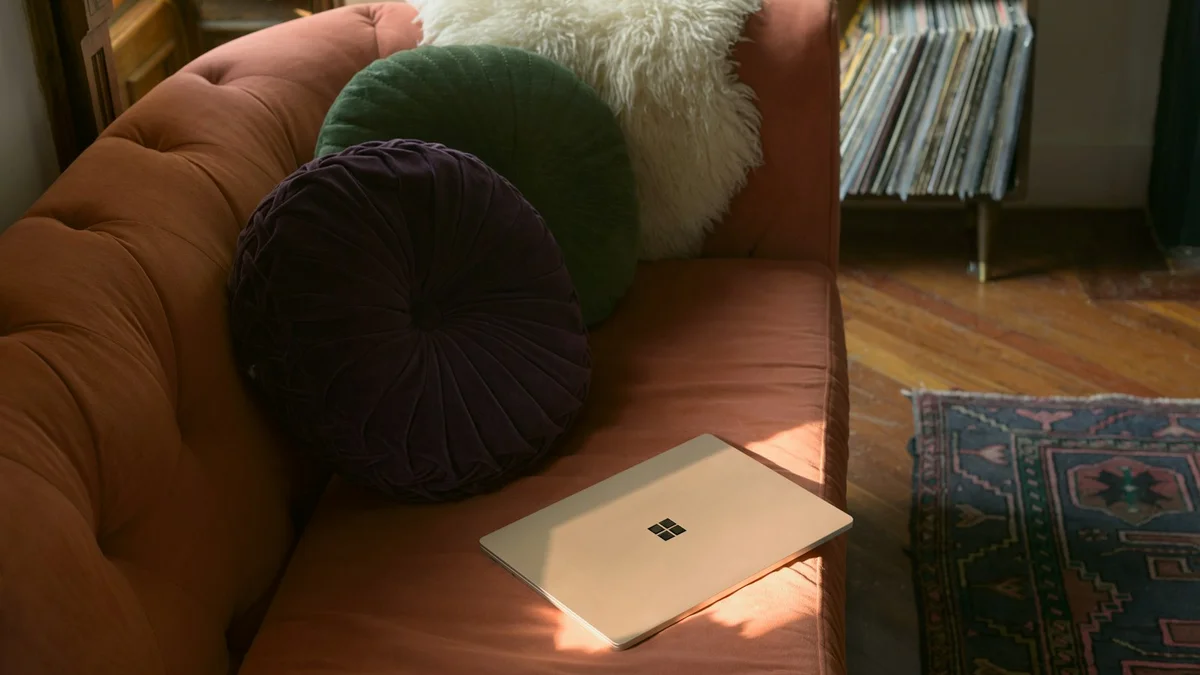
It is 9:20 at night. The laptop is open on the same table where dinner happened an hour ago. You closed your last meeting at six, but there was “one more thing,” and then a thread that needed you, and now you are back in the same chair, in the same room, under the same light as the workday - answering a message that could have waited until morning and would, except that here, waiting feels impossible.
Nobody commutes home from this. The commute is eleven steps. The office is the kitchen table, the desk in the corner, the second bedroom. There is no train where the day quietly ends, no walk to the car where your shoulders come down, no building you leave. The workday just… thins out, without ever announcing that it finished.
If your evenings feel like that message at 9:20 - technically yours, functionally not - the problem is not your discipline. It is a missing signal. This article is about remote work energy: why working from home drains some people more than the office ever did, and the small structures that give your nervous system what a commute used to provide for free. It is part of the broader work energy guide, and none of it requires moving your desk or your job.
Key takeaways
- Remote work drains energy not because it is remote, but because the line between work time and rest time disappears.
- Your nervous system needs a threshold it can feel; a fake commute or a doorway ritual restores it.
- Stated response times turn “always available” into a shape everyone can see.
- An end-of-day ritual that fits a home office takes under ten minutes and changes the whole evening.
The line that disappeared
The book names the mechanism directly: “Blurred boundaries: Remote work, hybrid schedules, and the expectation of instant responses have erased the natural line between ‘work time’ and ‘rest time.’ Your nervous system never gets a clear signal that it’s safe to switch off.”
Read that once and a lot of modern tiredness suddenly makes sense. The office was never just a place where work happened. It was a bundle of signals - the badge, the door, the drive - and those signals did a job nobody thanked them for: they told your body when the demanding part was over. Remote work kept every demand and removed every signal. The result is a body that stays mildly braced from 8 AM to midnight, not because you are working all that time, but because at any given moment you might be.
The culture piled on. As the book observes, “The modern workplace has played a massive role in this normalization. Remote and hybrid work blurred the lines between office and home, making it feel acceptable to be ‘always available.’” Acceptable - even praised. You have probably seen the late-night reply praised in a team channel and felt the quiet arithmetic: if that is dedication, what is my silence at 10 PM?
This is why remote work energy problems feel so personal and are actually so structural. You are not bad at switching off. The switch was removed. The rest of this article puts it back, in pieces small enough for a real job.
Build a commute, even a small one
The single most effective move for a home worker is also the strangest-sounding: manufacture the journey you no longer take. A commute is a decompression corridor with a door at each end, and your body will accept a rebuilt one in almost any size:
- The fake commute. A ten-minute walk before work and another after - around the block, to the corner and back. No phone podcast required; the walk itself is the point. Bookended, your day gets a shape again.
- The doorway ritual. If you cannot leave, cross a threshold on purpose. Close the laptop in one room, walk to another room, take three slow breaths, and begin the evening there. Same apartment, different country.
- The costume change. Clothes that are only for work, changed out of at the same time each day. It sounds trivial until you notice how much of “off duty” is a physical feeling.
What matters is not the form. It is that the transition becomes a felt event - something with a beginning your body can notice and an end it can rest behind. Slow transitions at this size are one of the quietest energy practices there is, and they work precisely because they are small enough to actually happen.
Give your availability a shape
“Always available” is not a boundary problem, mostly. It is an information problem: your team does not know when you are reachable, so everyone assumes always, and you end up performing always. The fix is a stated response time - a visible, friendly edge around your availability.
The book’s example is wonderfully plain: “I check emails until 6 PM.” That sentence, in a signature or a status or a team norm, converts an unwinnable expectation into a schedule. Around it, the book pairs a household-grade rule: “No work-related messages after 7 PM” - as a personal standard, or an agreement with a partner, or a norm you propose to the team. Batch your replies into two or three windows instead of grazing all day, and the messages stop arriving as a continuous weather system.
Two things worth saying about the fear that comes up here. First, most teams adapt to a stated response time within days, because most colleagues were never demanding 10 PM replies - the culture was, diffusely, and culture is negotiable one clear sentence at a time. Second, if the pressure to be always on runs deeper than norms - if it follows you into every room of the house and every hour of the night - digital boundaries for remote workers goes further, and the digital curfew handles the device-side of the same problem.
Camera energy is real
Video calls cost more than their calendars suggest. On camera you are doing two jobs: the meeting, and the performance of being in the meeting - monitoring your own face, holding an attentive expression, sitting still within a frame. That second job is silent, unpaid, and surprisingly expensive, which is why a day of video can flatten you more than a day of harder work.
Small mercies that add up:
- Go audio-only for the calls where video adds nothing. A standing walk during a listen-only call is not disengagement; it is often better attention.
- Hide your own tile. Watching yourself talk doubles the performance tax for zero benefit.
- Keep a few minutes of gap between video blocks, and let your eyes rest on something more than an arm’s length away between them.
None of this needs announcing. It is private maintenance for a format that quietly spends more than it shows.
An end-of-day ritual that fits a home office
The last piece is the bookend that makes everything else hold: a deliberate close to the workday, short enough to survive a busy week. Under ten minutes:
- Close the loop. Write tomorrow’s first task on a card or a sticky note. One line. This tells your mind the day’s threads are parked somewhere safe, which is most of what late-night rumination is chewing on.
- Shut it out of sight. Laptop closed, work notifications silenced, and - if space allows - the work corner in shadow. Out of sight is not decorative; it is the signal.
- Cross the threshold. The fake commute, the doorway breaths, the costume change. Pick the one that fits your home and do it at roughly the same time daily.
- One minute before the phone. Before you open your personal phone and pour the evening into it, take sixty seconds to breathe and let the day drain. The book treats this single minute as a hinge, and it is.
If you do this for two weeks, watch the evenings, not the ritual. The shift is quiet: a mind that winds down at a normal hour instead of idling at high RPM until midnight. And if exhaustion persists despite these changes - if the wired-at-night feeling predates remote work and outlasts vacations - that is worth taking seriously; the book follows a remote engineer whose pattern looked exactly like this in high-functioning exhaustion for people working from home.
Frequently asked questions
My whole team is online at all hours. Can one person’s boundaries survive that?
Usually, yes - stated calmly and early. A response time like “I check emails until 6 PM” sets an expectation rather than making a protest, and teammates typically adjust within days. You are not asking anyone to change their habits; you are publishing yours, which is the version of this that survives group pressure.
I work in a small apartment. Where does the threshold go?
The threshold is an event, not a location. Close the laptop and turn the chair to face a different direction. Walk one slow lap of the home. Change your clothes. In the smallest spaces, a two-minute ritual at the same time each day does the work a door would do.
How do I stop checking messages at night?
Make the morning responsible for it instead of your willpower. Messages after your stated cutoff are, by your own definition, tomorrow’s work - so batch them into tomorrow’s first window and park the phone outside the bedroom. The digital curfew gives a full plan for the after-hours device habit.
Is remote work itself the problem?
No - and this distinction matters. Remote work removes transition signals and makes availability feel infinite; those are structural gaps, and gaps can be filled. With a fake commute, stated response times, and a real end-of-day ritual, many people end up with more energy than they ever had around an office, because they get the commute’s benefit without its cost.
If you want the complete system - the energy audit, the boundaries, the rituals, and the recovery practices behind all of this - Quiet Core Reset was written for exactly this.
Educational content, not medical advice - if exhaustion or burnout symptoms persist, please consult a professional.