Nervous System Regulation
Regulating Your Nervous System When You Work From Home
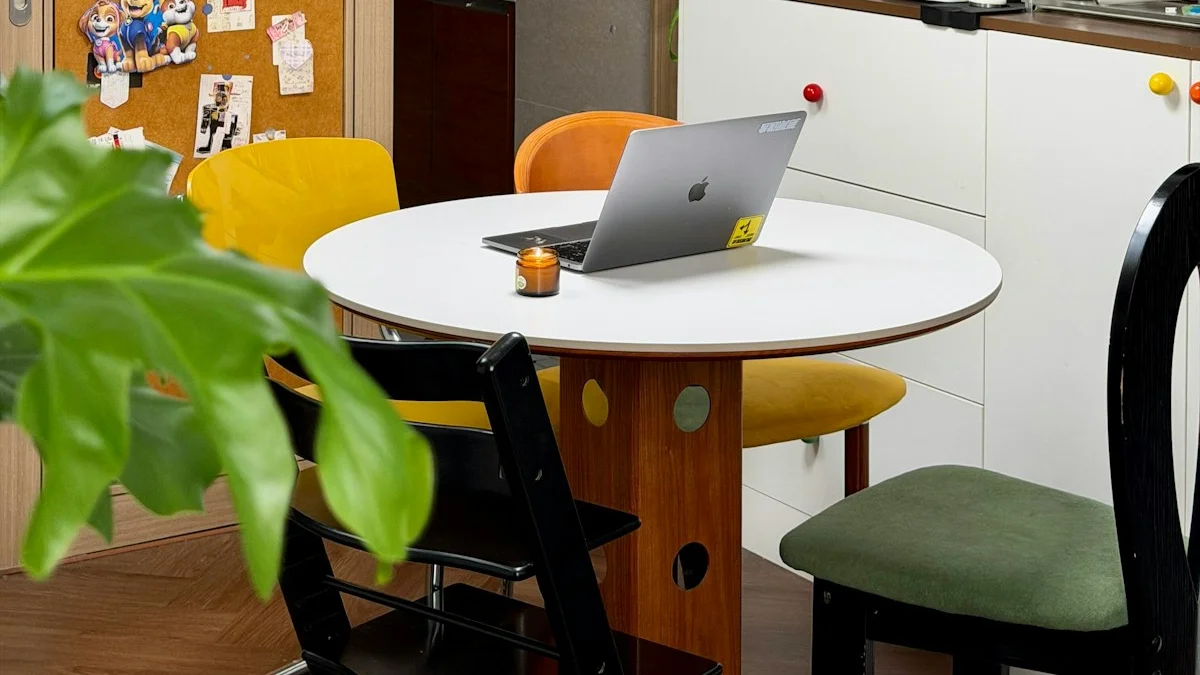
The laptop lives on the kitchen table now. The meetings happen where you eat dinner. The inbox is steps from the bed. You told yourself working from home would save you the commute, and it did, but it also erased the one thing your nervous system needs most: a clear signal that work is over.
Your nervous system relies on transitions. The commute, the closing of the office door, the walk from the train to the house, these are not dead time. They are the moments your body registers the shift from one mode to another. When the transition disappears, the alarm mode stays on, because there is no signal telling it to stand down. The complete guide to nervous system regulation explains the mechanism. This article is about what to do when home and office are the same room.
The lost transition problem
Here is what happened when I first worked from home, and what happens to most people who do it.
The morning blend: coffee in one hand, Slack open in the other. The lunch blend: leftovers reheated while reading emails. The evening blend: laptop on the table during dinner, just to check one thing. The nervous system never gets a clear “now you are safe” signal, because it never receives a clear “now you are done” signal either.
The result is a low hum of activation that runs from wake-up to sleep. You are never fully at work, because the washing machine is right there. You are never fully at rest, because the inbox is right there too. That in-between state is not efficient. It is expensive. Your system burns energy maintaining a state that never resolves.
How to rebuild transitions when there is no commute
You cannot add a thirty-minute drive to your day. But you can add small signals that tell your nervous system a transition has happened. Here are five that cost almost nothing.
1. The walk-around-the-block. Before you start work and after you finish, walk around the block without your phone. Five minutes. It creates a physical boundary between home-mode and work-mode. The walk itself is a transition narrative: leaving one state, entering another. If you can do only one thing on this list, make it this one.
2. The closing ritual. When the workday ends, do one deliberate thing that means “done.” Close the laptop fully, not to sleep mode. Turn off notifications. Put your work phone face-down. One specific action that the nervous system can recognise as a boundary. I use a single long exhale while pressing the power button. The regulate your nervous system in 10 minutes guide has more on closing rituals.
3. The room shift. If you work in a shared space, move the work items out of sight when the day ends. A laptop in a drawer, a notebook on a shelf. If you work in a dedicated room, close the door behind you. The visual separation matters more than you think. Your system registers “the work objects are gone” as a safety signal.
4. The sensory off-ramp. Commutes usually involved sensory shifts: air on your face, music in your ears, movement under your feet. Replace them. When you finish work, change your clothes. Step outside for two minutes. Wash your face. One sensory shift that says “different mode now.”
5. The post-work pause. Before you transition from work to family or solo evening, take sixty seconds of nothing. Sit, breathe, let your eyes go soft. Do not pick up your phone. Do not start dinner. Do not check anything. Sixty seconds of active transition. It feels like nothing and it changes everything.
Why the home environment keeps you activated
Your home was, until recently, your sanctuary. Now it is also the place where you have difficult calls, respond to critical emails, and think about quarterly goals. The context collision is real, and your nervous system does not handle context collisions well.
The fix is not perfect separation. That is a fantasy for most people. The fix is creating enough small signals of transition that your system can distinguish between the contexts even when the room is the same. Light matters: a work lamp vs. an evening lamp. Sound matters: a playlist for work, silence for rest. Scent matters: a candle you light only during work hours. Regulating your nervous system at work without leaving your desk has more on sensory anchors.
What shifts after a few weeks
The first few days, the transition practices will feel performative. You will walk around the block and think “this is not doing anything.” That is the alarm mode talking. It does not trust small gestures.
Then, slowly, the walk starts to feel like a release. The closed laptop starts to feel like permission. The sixty-second pause starts to feel like a reset. Your system learns that the ritual means safety, the way it used to learn that the office door closing meant the day was done.
You are not adding more to your day. You are restoring the signals your nervous system needs to function well in both modes. A regulated work-from-home life is not about perfect boundaries. It is about enough signals that your system knows which mode to be in. If you are not sure your system is even stuck, the stuck in survival mode self-check takes five minutes, and survival mode vs. rest & digest explains why the transition matters so much. For the science behind why the alarm stays on at home, what science says about nervous system regulation fills in the mechanisms.
Key takeaways
- Working from home erases the transition signals your nervous system uses to know work is over, so the alarm stays on.
- Rebuild transitions deliberately: a phone-free walk around the block, a closing ritual, moving work items out of sight.
- Replace the sensory shifts of a commute: change clothes, step outside, wash your face as an off-ramp.
- One ritual a day is enough to start. The system learns that the ritual means safety the same way it learned that the office door closing meant done.
Frequently asked questions
Why do I feel more tired working from home than in an office?
Because you are never fully at work, the washing machine is right there, and never fully at rest, the inbox is right there too. That in-between state burns energy maintaining a state that never resolves. The fix is not perfect separation. It is enough small transition signals that your system can distinguish the contexts even in the same room.
What if I cannot walk around the block?
Any deliberate action that means “done” works. Close the laptop fully instead of sleep mode, turn off notifications, put your work phone face-down, and take one long exhale while you do it. The ritual itself is the signal. Specificity matters less than doing the same thing every day.
How long before these practices feel natural?
The first few days they will feel performative, and that is the alarm mode talking. Then slowly the walk starts to feel like a release and the closed laptop starts to feel like permission. Your system learns that the ritual means safety the way it used to learn that the office door closing meant the day was done.
Do I need to keep work and home in separate rooms?
No. Context collisions are real, but the fix is sensory anchors, not architecture. Use a work lamp and an evening lamp, a playlist for work and silence for rest, a candle you light only during work hours. Your system registers these markers even when the room is the same.
Quiet Core Reset builds the full architecture of these transitions, from the science of context-switching to the daily practices that fit a life where home is also work. It starts with one walk around the block and a slow exhale at the door.
This article explains how the book describes the nervous system. It is not medical advice. If anxiety, panic, or other symptoms persist, consult a professional.