Family & Relationship Energy
How to Play With Your Kids When You're Exhausted (It Counts)
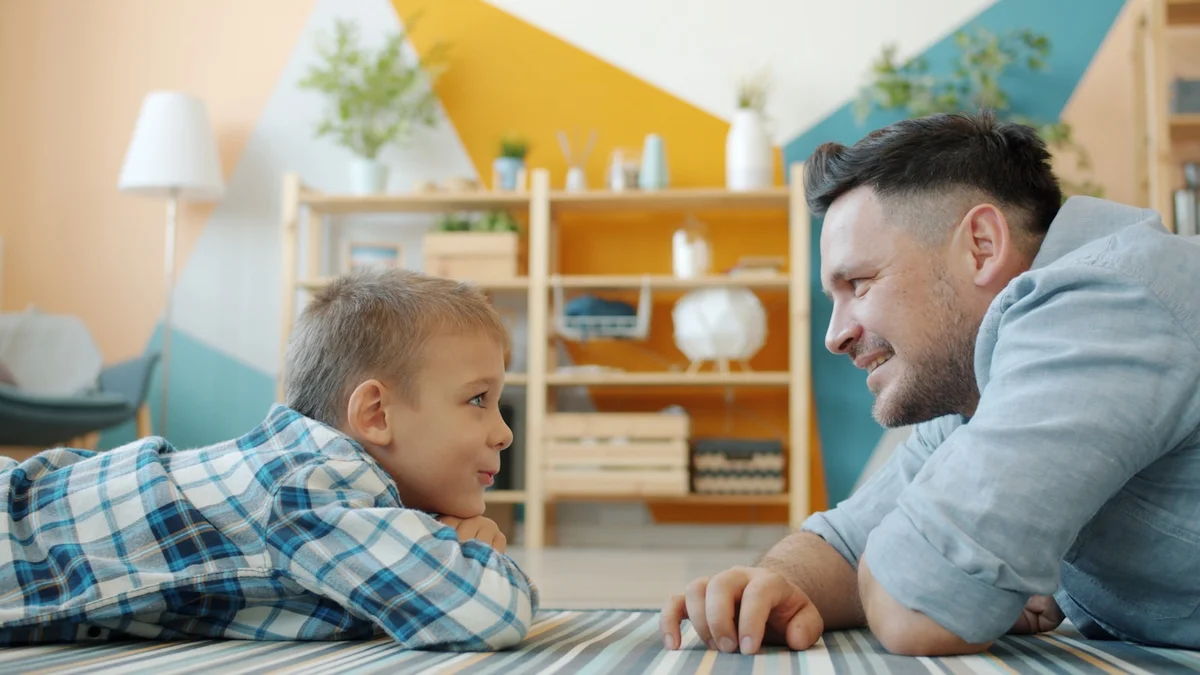
The request comes at 5:40 PM, from a small person with enormous expectations: “Will you play with me?” And you are on the couch with your shoes still on, and your body feels like it is filled with wet sand, and somewhere inside you a voice says: a good parent would get down on the floor right now.
You want to. That is the painful part. You can picture the blocks and the pretend restaurant and the version of you with endless patience, and the distance between that picture and the couch you are sitting on feels like proof of something. It is not proof of anything except that you are empty, and play, real play, the kind with voices and plots and staying in character, is one of the most energy-expensive things a tired adult can do.
So let us shrink the problem until it fits the energy you actually have. Because children do not need a performer. They need a person, and there are ways to be one tonight that cost almost nothing. The family energy guide maps the whole territory of showing up for your people on low battery; this article covers one small, common corner of it.
Key takeaways
- Play that exhausts you is usually play framed as performance: characters, energy, staging. Presence is what your child actually registers.
- The book is clear that the most powerful recharging happens in fully present moments, and those moments refill you while you play.
- Low-battery games, five to ten minutes of low-output attention, count. Ten honest minutes beat an hour of half-there.
- On empty days, honesty beats performance: “I have ten quiet minutes in me, and I want to spend them with you.”
Why play feels impossible when you are empty
First, the mechanics, so you stop reading the situation as a moral failure. When your energy is gone, your body trims everything it classifies as optional. The book puts it directly: survival mode conserves energy “by shutting down non-essential functions like creativity, deep emotional connection, and spontaneous joy.”
Look at that list and you will see play hiding inside every word. Creativity is the dragon voice and the plot twist. Spontaneous joy is the laughing until someone snorts. Deep connection is the whole reason your child asked in the first place. Play asks for exactly the functions your exhausted body has switched off to keep you upright.
This is why “just get on the floor” advice fails so completely. It asks a rationed system to spend its last reserves on its most expensive activity. You end up resenting the game, then resenting yourself for resenting the game. The problem was never your love. It was the energy budget underneath it.
Play is presence, not performance
Here is the reframe that changes everything: your child is not auditioning you. They are not scoring your voices or comparing your stamina to other parents. What they want, in the wordless way children want things, is your attention with nothing else attached to it.
The book describes where the real exchange happens: “Some of the most powerful recharging happens when you are fully present - having a real conversation with someone you love, listening to music without doing anything else, or simply sitting in silence. These moments feed your Quiet Core in ways that passive consumption cannot.”
Notice what the book is promising. Full presence is not only the gift you give your child. It is also the thing that refills you, which passive scrolling never does. Real play on low battery is a strange bargain: you give a small amount of genuine attention and receive back more than you spent. That is the difference between play as performance, which drains, and play as presence, which circulates. Deeper versions of this idea live in family time on low-energy days.
Low-battery games that actually work
These are honest, tested-by-tired-parents formats. Each one runs on attention rather than energy. Pick by whatever you have left.
Lying-down games. You are allowed to play horizontally. “Guess which hand,” twenty questions, or the classic where they draw on your back and you guess. From the outside it looks like nothing. From a child’s view, a parent lying still and paying attention to only them is a feast.
Audience games. You sit, they perform. A show, a museum tour of their drawings, a fashion parade, stuffed animals introduced one by one. Your job is eyes, reactions, and one question at the end. The energy cost is roughly that of watching television. The difference for your child is enormous.
Side-by-side making. You draw badly on purpose, sort blocks, or fold the laundry while they build the tower next to you. Parallel presence. Conversation happens sideways, without eye contact pressure, and children say the biggest things in these sideways moments.
The narration game. They narrate what you do in a sports-commentator voice while you make dinner. “She reaches for the pot. Will she find the lid?” You cook; they direct. Everyone eats, everyone plays.
One-question stories. You start a story with one sentence and they decide everything after that. “A turtle knocked on the door. What did it want?” They do the creative lifting. You drive, gently, from the couch.
Five to ten minutes of any of these, phone in another room, is a real childhood memory in the making. Anyone who tells you ten minutes does not matter has never watched a child recount those ten minutes at breakfast the next day.
The ten-minute deal
There is a version of this that works even on the worst days, and it runs on honesty instead of stamina. You tell your child the truth: “I have ten quiet minutes in me tonight, and I want to spend all of them with you.” Then a timer, then a real ending, then you return to the couch without pretending otherwise.
The ten-minute deal works because it replaces vagueness with reliability. Children can handle your limits far better than they can handle your limbo, the parent who is technically present for two hours while checking a screen and sighing. A defined ten minutes of full attention reads, to a child, as love. Two hours of half-there reads as absence wearing your clothes. If the half-there evenings have become the norm, a real story about the evenings someone stopped snapping shows how small changes like this compound over weeks.
And you do not have to manufacture the patience first. A slow exhale before you start, one hand on your chest while the timer counts, these tiny resets settle your system enough to be present at all. The parent-sized versions are collected in micro-resets for parents and caregivers.
What your child will actually remember
Adults rarely remember the elaborate birthdays. They remember that someone lay on their bed and talked while the ceiling fan turned. They remember being watched at the pool, really watched. They remember the ordinary evenings when a tired parent chose ten real minutes anyway.
The book calls this sharing ordinary joy, connection built from small shared moments rather than big efforts, and it might be the most encouraging finding in the whole practice: the bar is lower than guilt told you. Presence, not production. Warmth, not wizardry. One reader of the book, a project manager with two small children, spent three weeks on small resets like these and reported being noticeably less reactive and snappy with her children in the evenings. The children noticed. That was the whole review.
When even ten minutes is too much
Some nights the honest number is zero, and forcing a game would only produce a bad memory for both of you. On those nights, tell the truth kindly, protect a few minutes of actual recovery, and aim for the smallest possible contact: sitting together while they watch their show, a goodnight that lasts three breaths longer than usual. That is family time at minimum viable dose, and it still counts. If empty evenings have become most evenings, the gentler starting point in family energy when you are already burned out meets you where the couch is.
The point of all of this is not to make you a better entertainer. It is to return you to yourself, because the book says it plainly: “This is not about becoming less caring. It is about learning to care from a full cup instead of an empty one.” Small refills, honest limits, ten real minutes. That is the whole method, and it fits on a couch.
Frequently asked questions
Does ten minutes of play really count?
Yes, and more than most tired parents believe. Children measure attention, not duration. Ten minutes with your eyes, your voice, and your phone elsewhere registers as genuine connection, while two distracted hours often do not. Frequency matters more than length; most days beat one heroic Saturday.
What if I start playing and feel irritation rising?
That is your depleted system asking for a downshift, not a verdict on your parenting. End the game cleanly rather than snapping through it: “I am out of battery sooner than I thought. Same game tomorrow.” Then take two minutes of real recovery. A honest ending protects both of you.
How do I stop feeling guilty about being too tired to play?
Start by aiming the guilt in the right direction. You feel guilty because you care, and the caring is evidence of the parent you are, not the one you fear you are. Guilt is a signal to refill your energy, not to perform more. Care from a full cup happens naturally once some charge returns.
What if one child wants to play and I have nothing left after work?
Be honest and specific: name the minutes you have and spend them fully. Then hand them a role in what you already have to do, the narration game at dinner, audience duty while you finish a task. Children mostly want to be with you. The format matters far less than the attention.
If you want the whole gentle system, the low-battery games, the decompression windows, and the small anchors that hold a family together on empty days, Quiet Core Reset was written for exactly this.
Educational content, not medical advice - if exhaustion or low mood persists, please consult a professional.