Family & Relationship Energy
The Family Energy Checklist: A Free Printable for Your Fridge
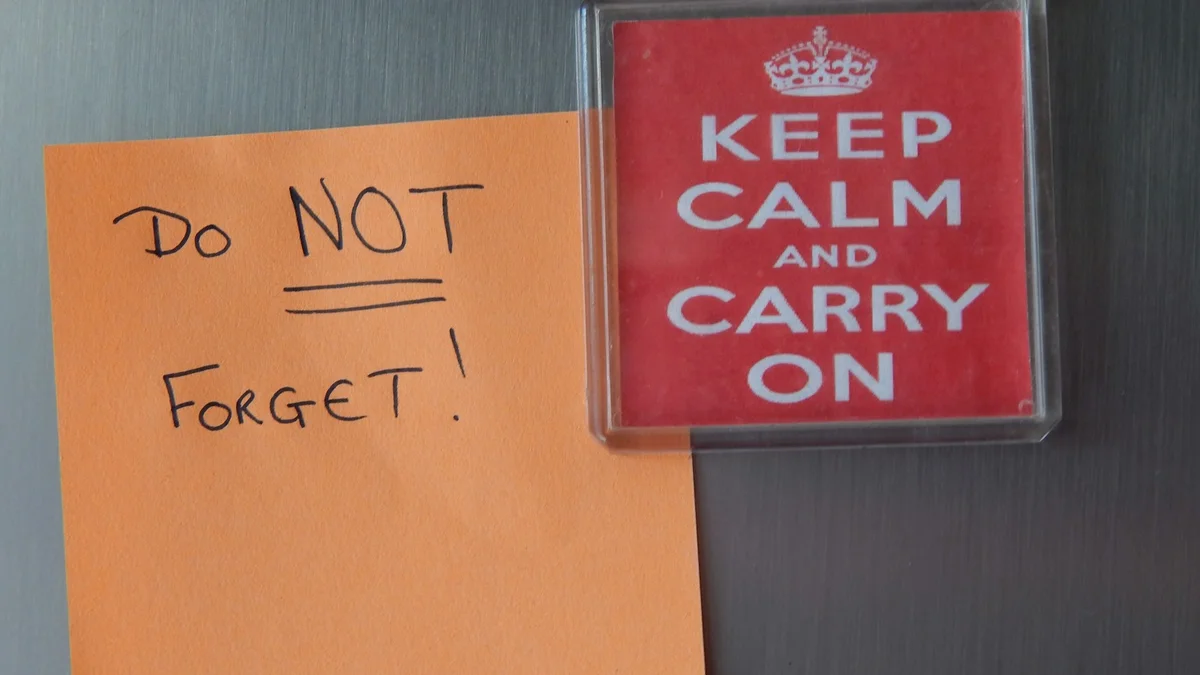
The fridge is the one screen everyone in your house already reads. School notes live there. The dentist card, the drawing with too many legs on the dog, the grocery list nobody follows. You open that door ten times a day, which makes it the perfect home for the only family tool that costs nothing and asks for two minutes.
Most energy advice fails because it lives in a book or an app you stop opening. The family energy guide explains the why behind all of it; this article gives you the compact version, the part worth sticking to the door with a magnet. A checklist your eyes already pass ten times a day has a fighting chance. A plan in your head, at 6 PM, does not.
Key takeaways
- Family energy protection works best when it is visible, tiny, and attached to moments that already happen.
- The checklist has four parts: the arrival, the evening, the week, and one sentence to say out loud.
- It is a glance, not a grade. Nobody scores you on it, including you.
- Print the list in this article or copy it by hand; the toolkit has the full set of templates if you want more.
How to use this checklist
Read it the way you read the grocery list, without ceremony. Once a day, glance at it and do the one line in front of you. Once a week, look at the whole thing and notice which line quietly happened on its own already. Once a month, ask honestly which line never happens and either shrink it or let it go.
That is the entire method. The checklist is not a report card for your parenting, and a skipped day is not a debt. It is a handful of small protections that keep your energy from leaking out of your home through unmarked doors.
The arrival line
One sentence, said on the way home or at the door, ideally announced in advance on a calm morning so nobody hears it for the first time mid-crisis. The book gives you the exact wording: “I need 15 minutes when I get home to decompress before I can be fully present.”
Fifteen minutes, thirty if the day was heavy. No phone, no chores, no heroic meal prep. Just a human being changing states. This single line does more for family energy than everything else on the list combined, because it decides what your family meets at the door: your workday, or you. If work tends to follow you all the way home, a shutdown ritual for the end of the workday closes the loop on the other side, so the window has somewhere to begin.
The evening lines
These three lines protect the hours where family energy is won or lost.
A hand on your belly for five minutes at some point after dinner, breathing slowly. This can happen on the couch next to a watching child; it does not need a silent room or closed doors.
The phone across the table or on a shelf for the meal itself, if the meal exists tonight. Not as a rule for the whole family, a preference for you. Half-attention feeds no one, and you can only tend your own half.
One sentence of ordinary joy, said out loud: something you genuinely liked about today, however small. The weather on the walk, the joke at dinner, the smell of the soup. Ten seconds, and it changes what kind of memory the evening becomes.
The weekly lines
Once a week, ten unhurried minutes, two lists on the back of the same paper: what drained me this week inside our home and our relationships, and what filled me. No verdicts, no names in the blaming sense, just patterns. Most people find one leak they can quietly close and one giver they can schedule more of.
Alongside it, one number: rate your energy from one to ten each evening, jot what preceded it, and after five or six days look for the shape. The pattern is usually simpler and more fixable than the story you have been telling yourself.
The whole checklist, ready to copy
Here it is in full. Print this page, or copy it by hand onto paper, because handwriting it once teaches it to you.
Family energy checklist - keep it where the milk lives.
- When I get home: fifteen minutes to decompress before I am fully present. Announced, not negotiated nightly.
- Sometime after dinner: five minutes, hand on belly, slow breaths.
- At the table: my phone away from my hands, my attention at the table.
- Before bed: one sentence of ordinary joy, said out loud to someone.
- Once a week: two lists, ten minutes - what drained me, what filled me.
- Each evening: one number, one to ten, and a note about what came before it.
- When someone needs me and I am empty: care, limit, and a time. “I want to hear this. I have nothing left tonight. Can it be tomorrow at lunch?”
Seven lines. None takes more than ten minutes, and most take under two.
When the checklist feels like one more chore
Then it has become the thing it was built to prevent, and it needs shrinking. Cut it to two lines: the arrival and the sentence of ordinary joy. The book’s gentle math applies here - a small practice done daily outweighs a complete system abandoned in a fortnight. The three-minute family energy self-check pairs well with the weekly number, and rebuilding family energy in ten minutes a day works the same way for the daytime hours.
And if you want to see what one line on this list did to one reader’s worst hours of the day, the story of evenings that stopped being a war is a kind place to look. The book puts it plainly: “When you stop leaking energy through constant people-pleasing and over-giving, you naturally have more left for yourself - and, paradoxically, you also become more genuinely present, patient, and generous with the people you truly care about.”
Frequently asked questions
Is there really a printable version?
Yes, and it is the list in this article. Print the page as it is, or copy the seven lines by hand onto paper and put it on the fridge. If you want matching templates for the rest of the system, the toolkit collects them in one place.
How often am I meant to look at it?
Once daily at a glance, once weekly with ten real minutes, once monthly with honesty. More often than that and it starts humming in the background of your mind like an obligation, which defeats the purpose. The fridge does the remembering; you only have to cooperate when the door is open.
What if I keep forgetting it exists?
Attach it to something the house does anyway. Every time someone opens the fridge at dinner preparation, the list is at eye level; that is the whole design. If two weeks pass and it has become wallpaper, refresh it: new paper, new pen, two lines instead of seven.
Can my partner and I share one checklist?
Yes, gently, as two honest columns rather than a shared scorecard. You each know which lines are yours, and nobody audits the other. This article explains how the book describes energy protection in relationships and family life; it is not medical advice, and persistent exhaustion deserves professional care.
If you want the practices behind these seven lines, with the science and the scripts in full, Quiet Core Reset was written for exactly this.
Educational content, not medical advice - if exhaustion or low mood persists, please consult a professional.