Attention Fragmentation
Attention Residue: Why You Can't Focus After Your Phone
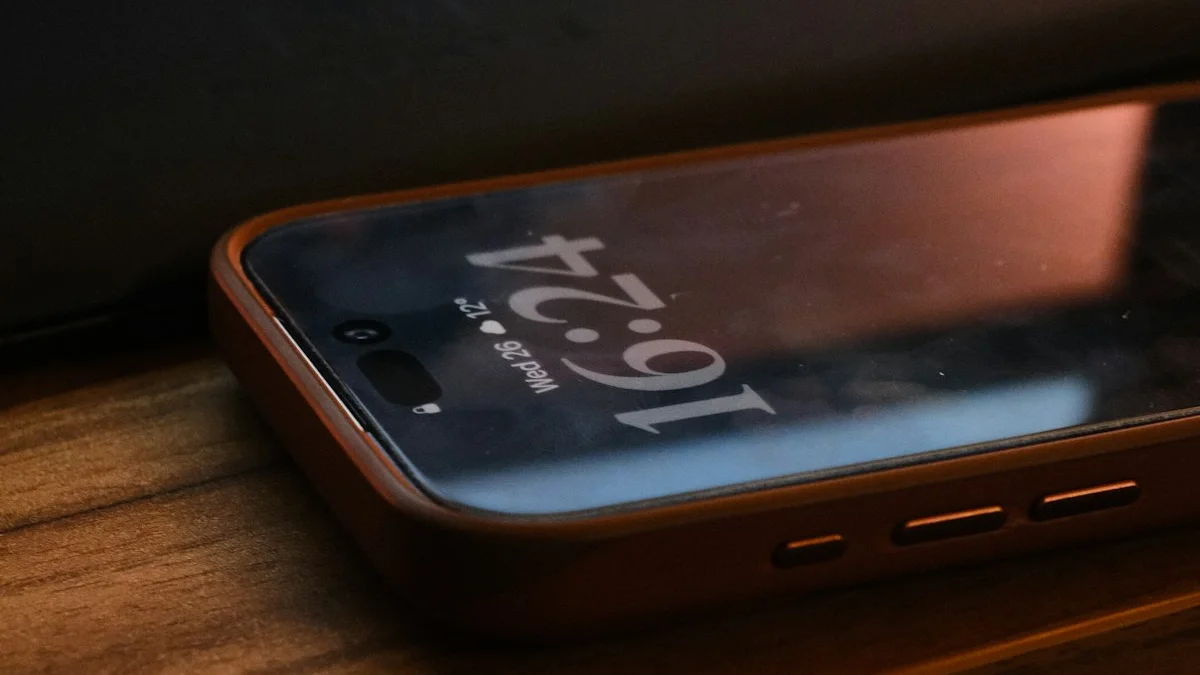
You sit down at your desk, determined to focus. You have an important task ahead - something that matters, something that deserves your full attention. You take a deep breath, open your document, and begin. The words start to flow.
Then your phone buzzes. Or maybe it doesn’t even buzz - maybe you just wonder if it might buzz. You pick it up to check. There’s a message from a friend, nothing urgent. You put it down and return to your work.
But something has shifted. You’re looking at the words on your screen, but your mind feels… different. Foggier. A part of you is still thinking about that message. Wondering if you should reply now or later. And somewhere beneath that, there’s a low hum of anticipation - the quiet expectation that something else might be waiting for you on that glowing screen.
Even after you put your phone down, a part of your mind often remains distracted - thinking about what you saw, waiting for the next notification, or carrying attention residue from the previous task. This is the invisible cost of our digital lives, and understanding it might change how you approach focus forever.
Key takeaways
- Attention residue is the leftover of a previous task that keeps clouding your focus after you switch.
- Simply having your phone visible - even silent - measurably reduces your available cognitive capacity.
- It takes roughly twenty minutes for residue to fade, which is why constant checking keeps you foggy.
- A single protected 90-minute block with your phone in another room can change how your whole day feels.
What Exactly Is Attention Residue?
The term “attention residue” was coined by Sophie Leroy, a professor at the University of Washington, in her research on why we struggle to switch between tasks. Her findings were striking: when you switch from Task A to Task B, your attention doesn’t fully follow. A residue of Task A remains, lingering in your cognitive workspace and interfering with your ability to concentrate fully on Task B.
Imagine spilling a small drop of ink on a piece of paper. You can write over it, and at first it doesn’t seem to matter much. But as you write more, that initial stain keeps showing through, muddying the words that come after - blurring the edges, making everything a little less clear. The ink of your previous task bleeds into your current one, subtle but persistent.
This is what happens in your brain when you switch from checking Instagram to writing an email, from reading a news headline to having a conversation, from glancing at a notification to trying to focus on your work. The previous content doesn’t just vanish when you decide to move on. It lingers, creating cognitive noise that makes true focus harder to achieve.
You might be wondering: is this actually a big deal? It’s just a quick phone check, right? The research suggests otherwise. Attention residue accumulates throughout the day, creating a fog that builds progressively. By afternoon, many people find themselves in a state of near-constant partial attention, wondering why they feel so mentally exhausted despite “not doing that much.”
If you’re interested in exploring why your brain feels so fried even on easy days, you might appreciate our article on why your brain feels fried even without a hard day.
Why Your Brain Holds On
To understand why attention residue happens, it helps to know a little about how your brain manages focus. Your prefrontal cortex - the part of your brain responsible for executive function - works something like a spotlight. It illuminates whatever you’re currently attending to, while suppressing everything else.
When you switch tasks rapidly, you’re asking your prefrontal cortex to keep repositioning that spotlight. It can do this, but each repositioning takes time and energy. More importantly, the previous illumination doesn’t immediately fade. Your brain needs what researchers call a “goal shift” - a moment to fully disengage from the previous task’s goals and engage with the new one’s goals.
Here’s the problem: in our hyper-connected world, we rarely give our brains that moment. We check a text and immediately try to resume working. We glance at email and jump into a meeting. We watch a quick video and try to refocus on conversation. The goal shifts are constantly interrupted, incomplete, or skipped entirely.
The result is that your brain ends up carrying multiple unfinished cognitive threads simultaneously. It’s like having a dozen browser tabs open in your mind - each one consuming processing power, even if you’re not actively looking at it.
The Phone’s Special Role
Your phone deserves special attention in this conversation because it’s the most frequent source of attention-switching triggers in modern life. It’s not just the interruptions themselves that matter - it’s the anticipation of interruption.
Your phone is never truly “off.” Even in silent mode, even face-down on your desk, your brain knows it’s there. It has been conditioned to associate that device with social connection, new information, and unpredictable rewards. This creates a baseline level of attentional monitoring - your nervous system stays partially alert, scanning for the next buzz, ding, or vibration.
This anticipatory state consumes cognitive resources. Studies on what’s called “mere presence” effects have shown that simply having your phone visible - even if it’s silent, even if you’re not using it - reduces available cognitive capacity. Your brain is spending resources monitoring the phone’s status, resources that could otherwise be directed toward your current task.
The Dopamine Loop: Why You Keep Coming Back
Understanding attention residue becomes easier when we look at the neurochemistry involved.
Every notification, every like, every new message triggers a small release of dopamine in your brain. Dopamine is often misunderstood as the “pleasure chemical,” but it’s more accurately described as the “wanting” chemical. It doesn’t just make you feel good - it makes you seek more. It creates a sense of anticipation, of craving, of needing to check.
The constant blue light, dopamine hits from notifications and likes, and endless novelty keep your brain in a heightened seeking state. This is the same neurological pattern seen in behavioral addictions - a cycle of seeking, brief reward, and immediate return to seeking.
You might have noticed this in your own experience: even when a notification is disappointing (a spam email, an uninteresting post, someone else’s vacation photos), you still feel a pull to check the next one. The dopamine system doesn’t care about the quality of the content. It cares about the possibility of reward. And as long as there’s a possibility - a possible important message, a possible interesting post, a possible social opportunity - your brain keeps seeking.
This seeking state is antithetical to focus. Deep concentration requires a different neurological mode entirely - one characterized by sustained attention, reduced novelty-seeking, and what neuroscientists call “transient hypofrontality,” a temporary quieting of the brain’s monitoring and seeking networks.
In other words: you can’t be in deep focus and dopamine-seeking mode at the same time. They’re mutually exclusive brain states. The more time you spend in seeking mode (checking, scrolling, monitoring), the harder it becomes to access the focus mode you need for meaningful work.
For a deeper exploration of how social media specifically interacts with your nervous system, check out our article on the nervous system and social media.
Mark’s Story: A Familiar Pattern
Mark is a 38-year-old software engineer who came to our attention through a conversation about afternoon brain fog. His story might sound familiar to you.
Mark described his days as seemingly productive but somehow unsatisfying - busy, but not the good kind of busy. He would arrive at work, check his email and Slack messages, attend a morning standup, work on code for a bit, check Slack again, review a PR, glance at the company chat, write some more code, check email again…
By 2 PM, Mark would hit a wall. His thinking felt sluggish, his code took longer to write, and he found himself re-reading the same lines multiple times without absorbing them. The screen would blur, his jaw would tighten, and he’d find himself reaching for his phone again - not because he needed anything, but because his brain was begging for a different kind of input. He assumed he was burnt out, or maybe not sleeping well enough, or perhaps just getting older.
When Mark tracked his interruptions for a single day, he was surprised to find he was checking his phone or switching communication apps over 70 times. Each check took less than a minute, but the attention residue from each one accumulated throughout the morning.
We suggested Mark try a simple experiment: block out 90 minutes each morning with his phone in another room and Slack notifications paused. Nothing else about his day needed to change - just this one adjustment.
The results weren’t immediate. The first few days felt uncomfortable, even anxiety-inducing. Mark noticed how strong the urge was to check, how his hand would almost automatically reach for his phone. But by the end of the first week, he noticed something remarkable: those 90 minutes felt like the first real focus he’d experienced in months. His thinking felt clearer, his code came easier, and the afternoon wall of brain fog pushed back significantly.
Mark didn’t eliminate his phone or quit his job. He simply created a small container of protected focus, and it made an outsized difference in how his brain felt throughout the entire day.
If you can relate to Mark’s experience, you might also find value in our guide on how to focus when your brain feels scattered.
The Cost of Constant Context Switching
Let’s talk about what this all adds up to over time.
Research from the University of California, Irvine found that the average office worker checks email 77 times per day and switches tasks approximately every three minutes. After each switch, it takes an average of 23 minutes and 15 seconds to return to the original task with full concentration.
Do some quick math: if you’re switching tasks every three minutes but need 23 minutes to refocus, you’re never actually reaching full focus on anything. You’re spending your entire day in a state of partial attention, where your brain is working hard but your cognitive resources are perpetually divided.
This constant switching prevents the nervous system from ever entering a calm, restorative state. Your brain remains in a low-level stress response throughout the day, consuming energy that should be available for actual thinking, creating, and problem-solving.
Over weeks and months, this pattern contributes to:
- Chronic mental fatigue
- Decreased ability to concentrate for extended periods
- Increased anxiety and restlessness
- Difficulty with creative thinking
- A persistent feeling of being busy but unproductive
The good news is that this pattern is not permanent. Your brain is remarkably adaptable, and small changes can create meaningful improvements.
Reclaiming Your Focus: Practical Strategies
Understanding attention residue is empowering, but knowledge alone doesn’t change behavior. Here are some practical, compassionate approaches you might try:
Single-Tasking as Slow Living
Single-tasking is a powerful form of slow living that improves focus and reduces mental fatigue. Instead of juggling multiple streams of information, try giving your full attention to one thing at a time.
This doesn’t have to be dramatic. When you eat, just eat. When you work, just work. When you talk to someone, give them your presence. Each moment of single-tasking is a small act of resistance against the fragmentation that surrounds us.
Protect Your Peak Hours
You might notice that certain times of day are naturally better for focused work - often the first few hours after waking, or perhaps a quiet period after lunch. These are your peak cognitive hours, and they’re precious.
Try minimizing context switching during these hours. Put your phone away. Close unnecessary tabs. Turn off notifications. Treat these blocks of time as sacred opportunities for the kind of deep work that creates real satisfaction and progress.
Create Notification Boundaries
Not all interruptions are equal. A phone call from a loved one might deserve your immediate attention. A notification about someone liking your post from three days ago probably doesn’t.
Go through your apps and ask yourself: which notifications genuinely require my immediate response? You might find that most of them can wait. Turning off non-essential notifications removes hundreds of daily interruptions without costing you any meaningful connection.
The 20-Minute Reset
When you notice yourself deep in attention residue - scattered, foggy, unable to settle - try a 20-minute reset. Step away from your screens entirely. Walk around. Look out a window. Let your brain’s spotlight gradually return to a single point rather than jumping between targets.
Twenty minutes is roughly how long it takes for attention residue to fade significantly. This isn’t wasted time - it’s an investment in the quality of your attention for the rest of the day.
Track Your Patterns
For one week, try keeping a simple log of when you check your phone and why. You don’t need to judge yourself - just observe. Many people are surprised to discover how often they reach for their device reflexively, without any particular reason.
Awareness is the first step toward change. When you can see the pattern clearly, you gain the power to choose differently.
A Comprehensive Approach
If you’re ready to dive deeper into understanding and addressing attention fragmentation in your life, our comprehensive guide to attention fragmentation brings together research, practical strategies, and reflective exercises to help you build a more intentional relationship with your attention.
Honoring Your Experience
As you explore these ideas, please be gentle with yourself. Attention residue isn’t a personal failure - it’s the natural consequence of living in an environment that constantly fragments our focus. Your brain is doing exactly what it was designed to do: responding to the stimuli around it. The fact that it’s struggling with modern demands isn’t a sign of weakness; it’s a sign that you’re human.
Change doesn’t happen overnight, and it doesn’t need to. Start where you are. Notice one pattern. Try one small adjustment. See how it feels. There’s no competition here, no finish line, no perfect way to do this.
The goal isn’t to become some kind of focus superhero who never gets distracted. The goal is to develop a more conscious, intentional relationship with your attention - to choose where your focus goes, rather than letting it be constantly hijacked by the next buzz or ping.
You deserve that agency. Your attention is one of the most valuable resources you have - perhaps the most valuable resource. Where you place it shapes your experience of life, your relationships, your work, and your sense of self.
Every moment of genuine presence, no matter how brief, is a gift you give yourself. And in a world that profits from your distraction - that engineers your attention for someone else’s gain - choosing presence is a quiet but profound act of self-care.
Frequently asked questions
How long does attention residue last?
Research suggests it takes roughly twenty minutes of focused work for residue from a previous task to fade significantly. That’s why frequent phone checks can leave you in partial attention all day.
Does my phone affect focus even when I’m not using it?
Yes. Studies on “mere presence” show that a visible phone - silent and face-down - reduces available cognitive capacity, because part of your mind keeps monitoring it for the next interruption.
What’s one experiment worth trying?
Block one 90-minute window with your phone in another room and notifications paused. The first days may feel restless, but many people find it restores a depth of focus they hadn’t felt in months.
This article is for informational purposes only and is not a substitute for professional medical advice, diagnosis, or treatment. If you are experiencing persistent exhaustion, anxiety, or emotional distress, please consult a qualified healthcare provider.