Ultradian Rhythm
Morning Person vs. Night Owl: What Your Energy Curve Reveals
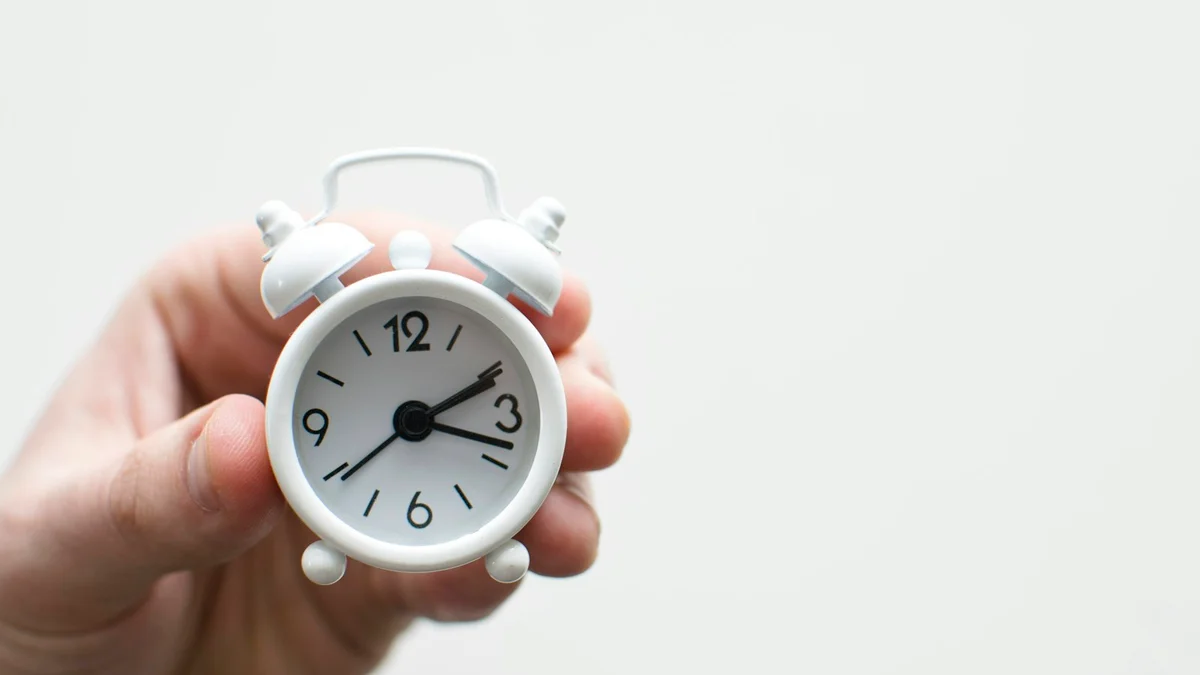
You’ve probably heard the labels your whole life. “I’m just not a morning person.” Or maybe you’re the one who wakes up before the alarm, brain already buzzing with ideas, wondering why everyone else seems to move through the morning like they’re wading through mud.
The morning person versus night owl debate has been going on for decades, usually framed as a matter of willpower or habit. But the truth is far more interesting-and far more useful-than that.
Your energy curve isn’t something you chose. It’s something you were born with. And understanding it might be the most important shift you can make in how you approach your days. If you want the science of the shorter cycles that move inside your daily curve, the ultradian rhythm guide is a natural next read.
Key takeaways
- Your chronotype-morning, evening, or somewhere between-is largely genetic. It is a starting setting, not a character trait.
- Working against it creates social jetlag: more errors, a shorter fuse, and lighter sleep, even when the hours look sufficient.
- Most people have two or three peak windows a day. Build your schedule around yours, not around someone else’s 5 AM.
- Chronotype shifts across your life, so it is worth re-checking your curve every few years.
Your Energy Moves in Rhythms
Unlike time, which is the same for everyone (24 hours in a day), your energy is highly individual.
Think about it this way: two people can sit down at the same desk, at the same time, with the same task in front of them. One is sharp, focused, and alert. The other is foggy, distracted, and struggling to keep their eyes open.
Same time. Same task. Different energy.
This isn’t about discipline or attitude. It’s about biology.
Your body runs on a master clock-your circadian rhythm-that governs when you feel awake, when you feel sleepy, when your body temperature rises and falls, and when your hormones peak and trough. This clock is incredibly precise, and it’s influenced by genetics, light exposure, age, and a host of other factors.
But here’s what most people don’t realize: your circadian rhythm doesn’t just tell you when to sleep and wake. It shapes your entire day. Your ability to focus, your emotional resilience, your creativity, your physical coordination-all of these follow a rhythm. And that rhythm is yours.
The Two Ends of the Spectrum
When we talk about morning people and night owls, we’re really talking about two ends of a spectrum called chronotype.
Your chronotype determines when your body naturally wants to sleep and wake, and it’s largely genetic. Researchers have identified several chronotypes, but they generally fall along a continuum:
Morning types (early chronotypes) wake up early naturally. Their peak energy and cognitive function come in the first half of the day. They tend to feel most creative and focused between about 8 AM and noon. By evening, their energy fades, and they’re ready for bed earlier than most.
Evening types (late chronotypes) are the opposite. They struggle with early mornings, often feeling groggy and unfocused until late morning or even early afternoon. Their peak energy comes later in the day-sometimes not until mid-afternoon-and they often do their best work in the evening hours. They tend to fall asleep later and need to wake up later.
Intermediate types fall somewhere in the middle, with peak energy in the late morning to early afternoon window.
And here’s the important part: neither chronotype is better than the other. They’re simply different configurations of the same biological system.
Why Chronotype Matters So Much
You might be thinking, “Okay, so I know when I feel most awake. So what?”
So everything.
When you work against your chronotype, you’re fighting your biology at every turn. You’re trying to do your most demanding work when your body is telling you it’s time to wind down. You’re forcing yourself into alertness when your system is designed for rest.
This mismatch-called social jetlag-creates a chronic state of misalignment between your internal clock and your external schedule. And it has real consequences:
-
Reduced cognitive performance. Studies show that people working against their chronotype make more errors, have poorer memory recall, and show decreased creative problem-solving ability.
-
Increased stress and emotional reactivity. When your body is tired but your schedule demands activity, cortisol rises. You’re more irritable, more anxious, and more likely to react negatively to small stressors.
-
Sleep disruption. Forcing yourself to wake up when your body isn’t ready, or trying to fall asleep when your body isn’t tired, leads to poorer sleep quality-even if you’re technically getting enough hours.
-
Long-term health risks. Chronic circadian misalignment has been linked to increased risk of metabolic disorders, cardiovascular issues, and mood disturbances. Your body doesn’t just feel bad when you’re out of sync-it suffers.
The Myth of the Productive Morning
Our culture has a deep bias toward morning productivity. “The early bird gets the worm.” “Win the morning, win the day.” “5 AM club.”
And for morning types, this advice works beautifully. Their biology supports it.
But for evening types, it can be a recipe for misery and underperformance.
Imagine telling a night owl that they need to wake up at 5 AM to be successful. They drag themselves out of bed, groggy and disoriented. They sit down to do their most important work, but their brain is still in sleep mode. They push through, fueled by caffeine and willpower, producing work that’s mediocre at best.
By afternoon-when their natural peak arrives-they’re already exhausted from fighting their body all morning. They’ve spent their best energy trying to be someone they’re not.
This isn’t a failure of discipline. It’s a failure of strategy.
Understanding Your Personal Energy Curve
So how do you figure out your own rhythm? Here’s where to start:
Pay attention to your natural patterns. For a week or two, notice when you naturally feel most alert, most focused, and most creative. Also notice when you tend to feel tired, foggy, or unmotivated. Don’t try to change anything-just observe.
Look at your sleep patterns. When do you naturally fall asleep when you have no obligations the next day? When do you naturally wake up? These times often reveal your body’s preferred schedule.
Notice your energy peaks and valleys. Most people have two or three peak energy periods during the day, with dips in between. Where do yours fall? When are you sharpest for demanding work? When are you best suited for routine tasks?
Consider your weekly patterns. Do you feel different on weekdays versus weekends? If you spend weekdays forcing yourself into an early schedule and then sleep in on weekends, that’s a strong signal that your natural rhythm differs from your imposed one.
Track your cognitive function. When are you best at different types of thinking? Creative brainstorming often peaks at different times than analytical work. Emotional conversations might be better at certain points in your cycle. Physical coordination has its own rhythm.
Working With Your Curve, Not Against It
Once you have a sense of your personal energy pattern, the next step is alignment-structuring your day to match your biology as closely as possible.
This might mean:
Protecting your peak hours. Whatever time your energy and focus are highest, guard that time fiercely. This is when you do your most important, demanding work. Don’t waste it on emails or meetings.
Scheduling strategically. If you know your energy dips around 2 PM, don’t schedule a high-stakes presentation then. If you’re sharpest at 10 PM, find ways to structure your work so you can use that time productively.
Matching task types to energy levels. High-energy periods are for creative work, complex problem-solving, and important decisions. Low-energy periods are better for routine tasks, administrative work, or activities that don’t require intense focus.
Being honest about your limits. If you’re a night owl, stop pretending you’re a morning person. The energy you spend trying to be something you’re not is energy you could spend being your best self.
Communicating your needs. This can be challenging in a culture that values early mornings, but it’s worth it. If possible, negotiate work hours that align with your natural rhythm. Many modern workplaces are becoming more flexible about this.
The Science Behind the Curves
Research into chronobiology has revealed some fascinating details about what’s happening inside your body:
Body temperature follows a rhythm. It rises in the morning, peaks in the late afternoon, and drops in the evening. Cognitive function tends to track with body temperature-when your temp is higher, your brain works better.
Hormone release is timed. Cortisol peaks shortly after waking (for morning types, this is early; for evening types, it’s later). Melatonin rises in the evening to prepare you for sleep. These hormones don’t just affect sleep-they affect energy, mood, and cognition throughout the day.
Cognitive abilities shift. Analytical thinking tends to peak in the morning for most people (though later for night owls). Creative thinking often peaks later in the day, when the prefrontal cortex is slightly fatigued and the brain makes more unusual connections.
Physical performance has a rhythm. Strength, endurance, and coordination all follow circadian patterns. Most people are physically strongest in the late afternoon.
Age and Chronotype
Your chronotype isn’t static-it shifts across your lifespan.
Children tend to be early types, waking early and getting sleepy early. Teenagers shift dramatically toward evening types, which is why early school start times are so challenging for them. As adults age, chronotype gradually shifts back toward morning again.
This means your energy curve at 25 may look very different from your curve at 45. Paying attention to these shifts allows you to continue aligning your life with your changing biology.
The Freedom of Understanding
There’s something deeply liberating about understanding your own energy curve.
When you stop blaming yourself for not being a morning person (or an evening person), when you stop trying to fit yourself into someone else’s schedule, when you start honoring your own rhythm-something shifts.
You stop fighting yourself. You stop wasting energy on self-criticism about why you can’t just “get up early and be productive.” You start working with the energy you actually have, rather than the energy you think you should have.
And here’s the beautiful paradox: when you stop fighting your biology, you often find that you have more energy, not less. Because you’re not spending it on the constant battle of override and recovery.
Starting Where You Are
You don’t need to overhaul your entire life to begin. Start with awareness.
For the next week, notice your energy patterns without judgment. When do you feel most alive? When do you feel most drained? What does your body actually want, independent of what your schedule demands?
Write it down. Look for patterns. And then-when you can-start making small adjustments.
Maybe you shift your most important work to your peak hours. Maybe you stop scheduling meetings during your natural dip. Maybe you give yourself permission to rest when your body asks for it, instead of pushing through.
These small changes can make a profound difference.
The Bigger Picture
Understanding your energy curve isn’t just about productivity. It’s about self-knowledge. It’s about respecting the biological reality of who you are instead of constantly trying to be someone else.
In a world that values uniformity-same schedules, same expectations, same definitions of success-honoring your unique rhythm is a quiet act of rebellion. It’s a declaration that you matter, that your needs are valid, and that there’s more than one way to live a good life.
Your energy curve isn’t a limitation. It’s a map. And when you learn to read it, it shows you the way to your best self.
Frequently asked questions
Can I change my chronotype?
Only at the edges. Genetics set the broad shape, though light exposure, age, and habits can nudge it. In practice, adjusting your schedule to fit your biology usually works better than forcing your biology to fit your schedule.
I’m a night owl with an early work schedule. What can I actually do?
Keep the mismatch as small as you can. Move demanding work into your real peak when the job allows, keep early hours as light as possible, and protect your sleep window fiercely so the debt does not compound.
How do I find my true chronotype?
Notice when you naturally sleep and wake when nothing forces the schedule-on vacation or a free weekend. A week or two of observation usually reveals your body’s preferred pattern.
Does my chronotype explain my 2 PM slump?
Only partly. Even people perfectly matched to their schedules feel the early-afternoon dip, because shorter ultradian cycles stack their own trough there. Chronotype sets your curve; both rhythms shape it.
This article is for informational and educational purposes only and is not a substitute for professional medical advice, diagnosis, or treatment. Always seek the advice of your physician or other qualified health provider with any questions you may have regarding a medical condition. Never disregard professional medical advice or delay in seeking it because of something you have read here.
Related Reading:
- Your Body Has a Built-In Energy Schedule - Are You Listening? - Discover how your body naturally schedules energy throughout the day.
- Protect Your Peak Energy Windows (It’s Not Selfish) - Learn to protect your most productive hours without guilt.
- Your Energy Works in 90-Minute Waves - Here’s Why - Understand the ultradian rhythm cycles that shape your energy.
To explore more about energy rhythms, chronotypes, and building a life that works with your biology, visit Quiet Core Reset.