Ultradian Rhythm
How to Map Your Personal Energy Cycles in 7 Days
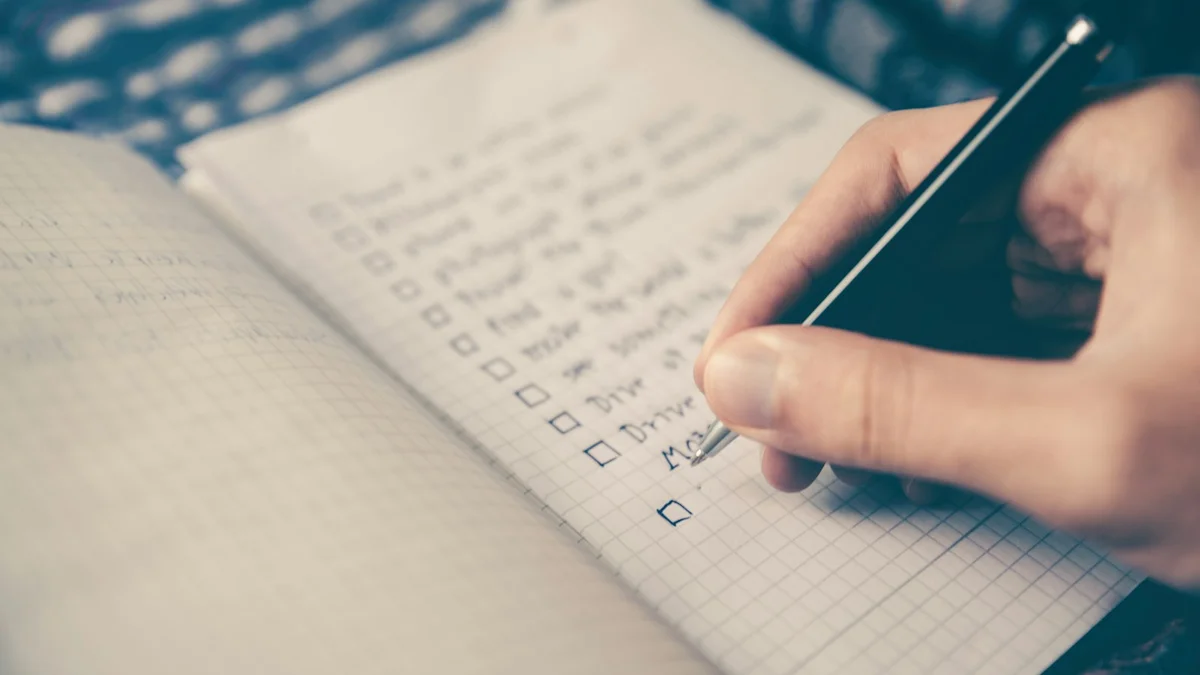
You have spent years managing your time. You have calendars, schedules, and routines. You know exactly what you should be doing at any given moment - the meetings, the deadlines, the carefully blocked deep work sessions.
But do you know how you feel at any given moment?
This is not a trick question. Most people cannot answer it. We have become so focused on what we should be doing that we have lost touch with how we are actually doing - the fog rolling in at 2 PM, the jaw clenching during meetings, the exhaustion that no amount of coffee seems to touch. We push through fatigue, ignore subtle shifts in our focus, and wonder why we feel depleted by the end of the day.
When you start managing energy according to your real cycles instead of just managing time on a calendar, you will likely experience less resistance, less guilt, and noticeably more sustainable energy.
The first step is not a new system or a complex methodology. It is simply paying attention. And the best way to pay attention is to map what is actually happening.
Key takeaways
- Generic energy advice fails because your patterns are specific to your body, your schedule, and your season of life.
- Three sixty-second check-ins a day, for seven days, give you twenty-one data points-enough to see your real curve.
- At each check-in, note your energy level, what preceded it, and what your body is asking for.
- Peaks are for demanding work, troughs for routine tasks and rest, and both deserve protection.
Why Most Energy Advice Fails
You have probably heard generic energy advice before. Get eight hours of sleep. Drink more water. Take breaks every hour. Exercise regularly. Meditate daily.
All of this is fine advice. But it is generic. And generic advice fails because it ignores the most important factor: you.
Your energy patterns are unique. They are shaped by your biology, your lifestyle, your stress levels, your sleep quality, your nutrition, your environment, and a dozen other factors that are specific to you. What works for the productivity influencer on Instagram might not work for you. What works for your spouse might not work for you. What works for you in January might not work for you in July.
The only way to know what works for you is to observe what actually happens in your body. Not what you think should happen. Not what you hope will happen. What actually happens.
This is where the 7-day energy mapping exercise comes in.
The 7-Day Energy Mapping Exercise
You cannot manage what you have not measured. Here is a simple 7-day energy audit that reveals your real patterns.
This exercise is designed to be gentle. It is not another task to add to your overwhelming to-do list. It is a practice of awareness that, paradoxically, will give you more energy by helping you understand where it goes.
What You Will Need
- A notebook or digital document
- A timer or alarm (your phone works fine)
- Your honest attention
That is it. No apps to download. No complicated spreadsheets. No expensive equipment. Just you, observing yourself with curiosity instead of judgment.
The Daily Practice
Set three alarms throughout your day. Choose times that feel natural to you-perhaps midmorning, midafternoon, and evening. When each alarm sounds, pause for sixty seconds and answer these three questions:
1. Energy Level (1-10)
How would you rate your energy right now? Be honest. This is not about where you think you should be. This is about where you actually are.
One means you are barely functioning. You might be fighting to keep your eyes open, or your brain feels like it is moving through mud.
Ten means you are fully charged. Your mind is sharp, your body feels vital, and you could take on anything.
Most people fall somewhere between three and seven. Notice where you are without trying to change it.
2. What Preceded This?
Look back at the last two to three hours. What were you doing? What did you eat? How did you move? Who were you with? What was your environment like?
This question is the key to the entire exercise. Your energy does not exist in a vacuum. It responds to what you do, what you consume, and how you live. By tracking what precedes your energy states, you begin to see cause and effect.
3. What Does My Body Want Right Now?
This is perhaps the most radical question. Instead of asking what your schedule says you should do next, ask what your body is actually craving.
Maybe it wants to move. Maybe it wants stillness. Maybe it wants food. Maybe it wants quiet. Maybe it wants connection. Maybe it wants solitude.
You do not have to obey this impulse. But noticing it creates awareness. And awareness is the first step toward change.
What You Will Discover
After seven days of this simple practice, you will have twenty-one data points. That might not sound like much, but patterns will emerge. You will start to see things you never noticed before.
You might discover that your energy crashes every day around 2 PM, and that it always follows a heavy lunch. You might notice that your best thinking happens between 9 and 11 AM, and that anything you do during those hours is twice as effective as anything you do later. You might realize that your energy is consistently higher on days when you move your body in the morning, and consistently lower on days when you skip it.
These insights are gold. They are the raw material for a completely different approach to your day.
Reading Your Energy Map
Once you have seven days of data, it is time to look for patterns. Here is what to look for:
Peak Energy Windows
These are the times when your energy is consistently highest across the week. Mark them. These are your golden hours-the times when you can do your most demanding, most important, most creative work.
Most people have two to three peak windows per day, each lasting about 90 to 120 minutes. They are not continuous. They are separated by natural dips.
Trough Windows
These are the times when your energy is consistently lowest. They are not failures. They are biological necessities. Your body is telling you it needs recovery.
Protecting peak energy is one of the highest forms of self-respect. But honoring troughs is equally important. When you try to push through your natural low points, you borrow energy from future hours and pay for it with interest.
Trigger Patterns
Look at what precedes your high-energy and low-energy states. What foods seem to support your energy? What activities drain you fastest? What environments help you focus? What environments scatter your attention?
These patterns are your personal energy blueprint. They are unique to you, and they are incredibly valuable.
The Surprise Factor
Many people are surprised by what they discover. They assumed they were morning people, only to find their energy peaks in the late afternoon. They thought a certain food was energizing them, only to discover it precedes their lowest energy readings. They believed they needed eight hours of structured work, only to realize that four to five hours of aligned work produces more meaningful output.
The data does not lie. And it does not judge. It simply shows you what is actually happening.
From Awareness to Action
Once you have mapped your patterns, the next step is alignment. This means structuring your day around your energy instead of forcing your energy to conform to your schedule.
Here are some ways to begin:
Protect your peak windows fiercely. Do not schedule meetings, calls, or administrative tasks during your highest-energy hours. These hours are for your most important work. Guard them as you would guard any other precious resource.
Use your troughs wisely. Your low-energy windows are perfect for tasks that require less cognitive load: email, administrative work, routine tasks, or simply resting. Do not waste your best energy on work that does not require it.
Build in proactive recovery. Do not wait until you are depleted to rest. Schedule brief recovery periods between your peak windows, even if you do not feel tired yet. Prevention is infinitely more effective than repair.
Experiment and adjust. Your patterns will shift over time. They may change with the seasons, with your workload, with your life circumstances. Continue to observe, and adjust your approach as needed.
A Gentle Reminder
This exercise is not about perfection. It is about awareness. You do not need to get every reading exactly right. You do not need to follow your patterns with rigid precision. You simply need to start noticing.
Some days you will forget to check in. That is fine. Some days your energy will not follow your usual pattern. That is fine too. The goal is not to create a perfect system. The goal is to create a relationship with your own body-one based on observation, respect, and responsiveness.
You have spent years managing your time. It is time to start managing your energy instead. And it starts with something as simple as paying attention to how you feel, three times a day, for seven days - noticing the fog, the sharpness, the subtle shifts you’ve been ignoring.
That is all. And it changes everything.
Frequently asked questions
Do I need a special app to do this?
No. A notebook and three phone alarms are enough. Simple tools keep the practice light, which is what makes it sustainable.
What if I forget a check-in?
Nothing is ruined. Note what you remember when you can, or simply skip that reading. The patterns hold even with a few gaps.
Is seven days long enough to see patterns?
For most people, yes-daily rhythms show up quickly. If you enjoy the practice, keep going, because longer records reveal weekly and seasonal shifts too.
What should I do once I can see my patterns?
Protect one peak window first, and move one recurring task into a trough. Small realignments tend to stick better than redesigning your whole week at once.
Related Reading
If this exercise sparked something in you, here are some next steps:
- Why Time Management Fails When Your Energy Is Depleted - Understanding why time-based systems fall short
- Protect Your Peak Energy Windows - Learn practical strategies for safeguarding your best energy
- How to Schedule Rest Without Guilt - Making recovery a priority, not an afterthought
- Complete Guide to Ultradian Rhythms - The science behind your natural energy cycles
This article is for informational purposes only and is not intended as medical advice. If you are experiencing persistent fatigue, exhaustion, or energy depletion, please consult with a qualified healthcare professional to rule out underlying health conditions. The strategies discussed here are complementary approaches and should not replace professional medical guidance.
Learn more about working with your natural energy rhythms in Quiet Core Reset.